The Prophet Muhammad ﷺ taught that charity extinguishes sins as water extinguishes fire. Perhaps this is why the confluence of charity and physical trial feels so right — the mud and the giving, the exhaustion and the generosity, all working together to purify what has grown stagnant within us.
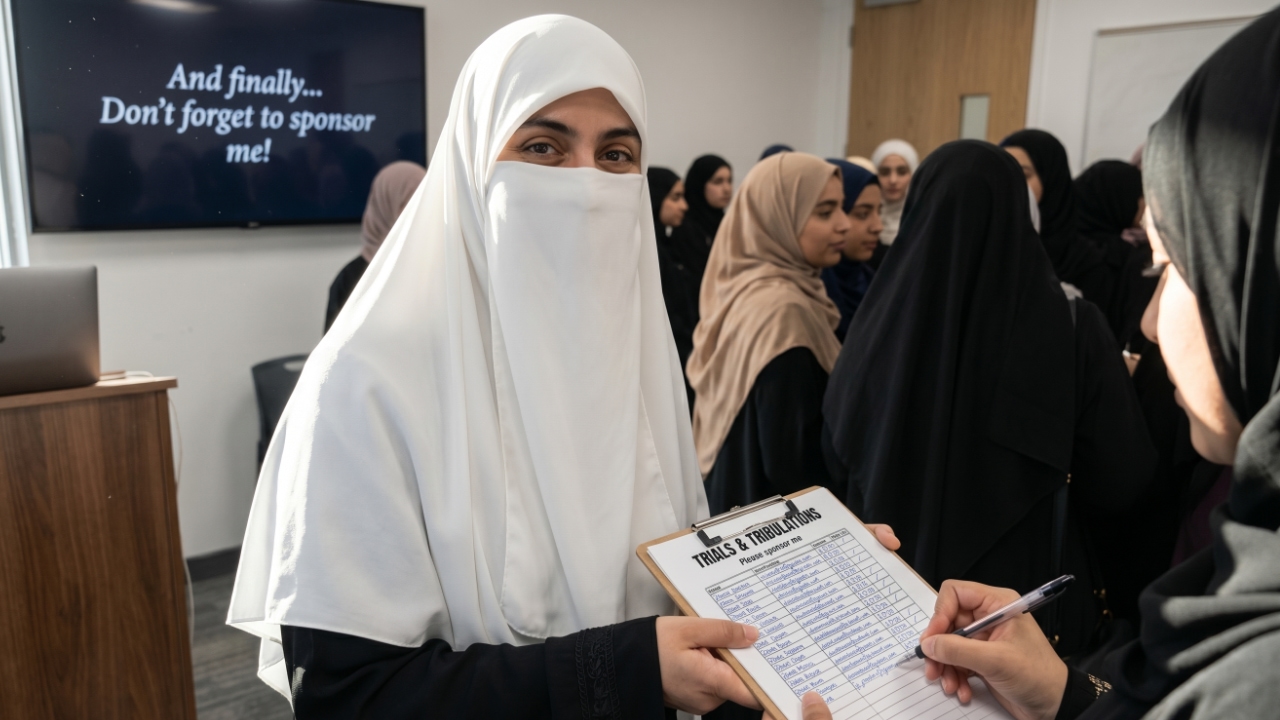
When you organise Trials & Tribulations as a sponsored challenge, you are weaving together two profound Islamic practices: the obligation to give and the discipline of embodied struggle. Your participants will not simply walk through obstacles; they will carry the weight of commitment to those who suffer, each sponsor’s pledge a thread binding their physical journey to the material needs of refugees.
The geometry of zakat and sadaqah
Islam makes charity both obligation and invitation. Zakat stands as one of the Five Pillars, a structured redistribution ensuring wealth flows toward those who need it most. This 2.5% of savings annually is a reminder that what we hold belongs ultimately to Allah, that prosperity carries responsibility woven into its very fabric.
But beyond zakat lives sadaqah, the voluntary charity as wide as human kindness itself. The Prophet ﷺ taught that even a smile given freely counts as sadaqah, that removing harm from a path is charity, that any act of goodness — however modest — carries eternal weight. When your participants seek sponsorship for this challenge, they engage both forms: structured fundraising that mirrors zakat’s discipline, and the spontaneous generosity of friends and family moved to give, which echoes sadaqah’s grace.
The challenge becomes a vessel for others’ giving. Each sponsor contributes not just money but connection — a thread of care reaching toward people they will never meet, refugees whose names they will never know, whose suffering they can only dimly imagine. Through your participants’ mud-covered determination, dozens of people find a pathway to fulfil their own calling toward charity.
Making it annual: sadaqah jariyah through ritual
Consider what happens when Trials & Tribulations becomes a fixture in your community’s calendar: an expected rhythm, like the turning of seasons. This is where charity transforms into something larger and continuous.
Islam celebrates sadaqah jariyah, the ongoing charity that benefits people long after the initial act. A well dug continues quenching thirst for decades. A tree planted feeds strangers’ children years hence. Knowledge shared ripples outward through generations. When you establish this challenge as an annual tradition, you create ongoing charity that compounds and multiplies.
The first year, sisters gather with curiosity and trepidation. The second year, they return with knowing smiles, bringing friends who heard their stories. By the third year, younger girls begin anticipating when they’ll be old enough to join, mothers and daughters walking the course together, the challenge woven into the community’s story of itself.
Each Autumn or spring — whatever season you choose — the fundraising begins again, the sponsorship forms circulate, the money flows toward those who need it most. The initial effort you invest in establishing this challenge continues bearing fruit long after your hands have moved to other work.
This is sadaqah jariyah made manifest through communal ritual. You are not just organising an event but planting something that will outlive you, that will continue calling forth generosity and embodied compassion years from now.
Sharing the challenge as beneficial knowledge
There is another layer of ongoing charity here, quieter but equally vital. When you tell others about Trials & Tribulations — when you write about it, explain it, share your experiences organising it — you engage in what Islam honours as beneficial knowledge, ‘ilm nafi’.
The Prophet ﷺ said that when a person dies, their deeds end except for three things: ongoing charity, beneficial knowledge, and a righteous child who prays for them. Sharing this challenge with other communities, helping them understand how to organise it themselves, documenting what works and what doesn’t — this is beneficial knowledge that will continue generating good long after you’ve moved on.
Each community that adopts this challenge because they learned of it through your efforts adds to your ongoing reward. Each woman who discovers embodied solidarity with refugees through this practice traces back, in some small way, to your willingness to share what you’ve learned. The blog posts you write, the conversations you have with other organisers, the honest accounts of both triumphs and mishaps — all of this becomes ‘ilm nafi’, or knowledge that keeps on giving.
This is not about claiming credit or building legacy. It is simply the mechanics of how good multiplies in Islam: generously, abundantly, beyond what we can track or measure.
The purification that happens in the giving
Ramadan teaches us something essential about charity and physical discipline intertwining. During that blessed month, fasting strips away distraction whilst heightened acts of worship — including increased giving — purify what remains. Many Muslims choose to pay their zakat during Ramadan, recognising that hunger sharpens empathy, that thirst teaches us what others endure daily.
We could say that Trials & Tribulations operates by similar principles. The mud and obstacles create a kind of waking fast from comfort, whilst the sponsorship component ensures the struggle translates into material support for those who suffer. Your participants experience a taste of displacement whilst simultaneously raising funds to address actual displacement. The physical and the charitable work together, each amplifying the other’s spiritual impact.
Charity in Islam serves partly to protect us from the corrosive effects of wealth — from arrogance, from the illusion of self-sufficiency, from forgetting that everything we have is borrowed and temporary. When your participants seek sponsorship, they humble themselves, asking for support in service of something larger. When their sponsors give, they loosen their grip on money, practising the generosity that keeps the heart supple.
This challenge you’re organising becomes a mechanism for collective spiritual purification through the union of struggle and giving.
An invitation to begin
The beauty of running Trials & Tribulations as sponsored fundraising is its simplicity. You need not reinvent charity or create complex new systems. You are simply offering your community a way to fulfil obligations they already hold — to give generously, to care for refugees, to walk in embodied solidarity with those who suffer — through a practice that honours both the Islamic tradition of charity and the human need for physical pilgrimage toward understanding.
When you establish this as an annual fixture, when you share it with other communities, when you document it honestly for those who will come after — you engage in ongoing charity that continues rippling outward long after the mud has been washed away and the sponsorship money disbursed.
This is the work you’re being called to: not just organising events but creating vessels for charity that will outlast you, that will continue calling forth generosity and connection and embodied compassion for years to come. The refugees for whom these funds flow may never know your name, but their dignity will be supported by the patterns you establish, the traditions you begin, the beneficial knowledge you share.
May this challenge become sadaqah jariyah for you. Ongoing charity that continues bearing fruit long after your hands have moved to other work, a well dug deep that continues offering refreshment to those who thirst.