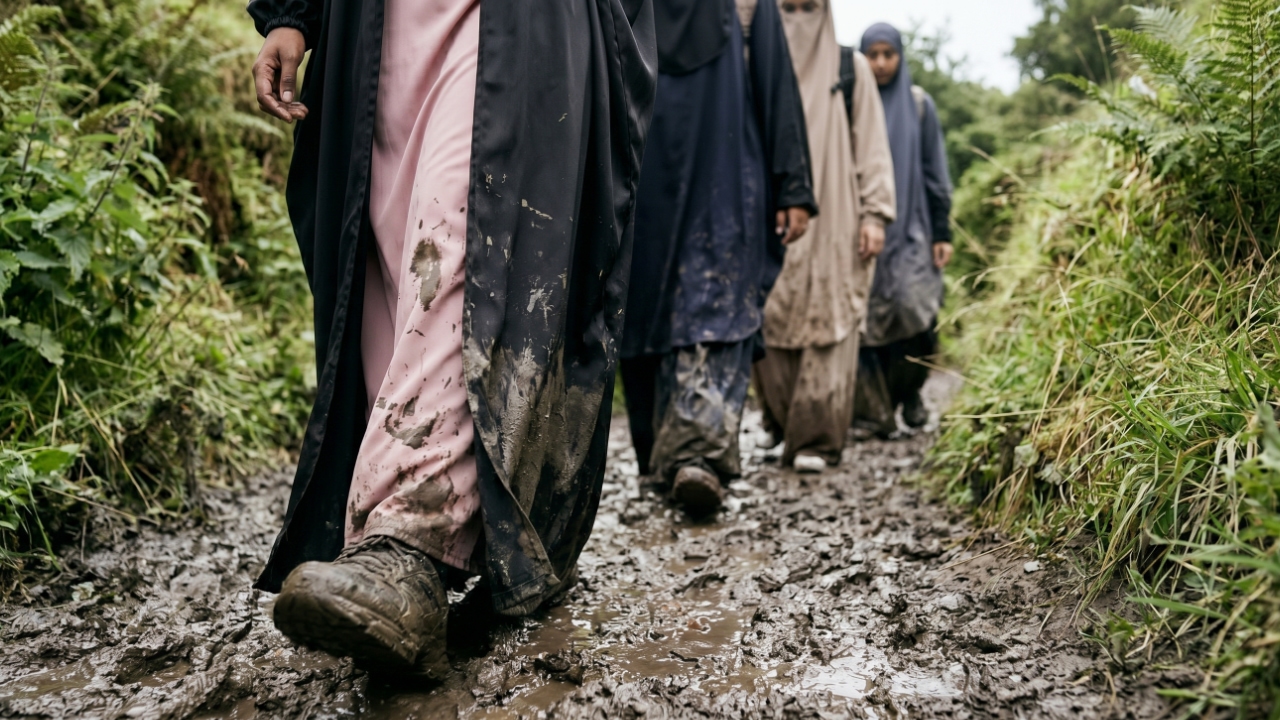
The morning air is crisp as they gather, the sky painted in the soft hues of dawn. They arrive wrapped in modesty, their long hijabs flowing like quiet devotion made visible, their garments a gentle armour against both wind and the world’s gaze. Beneath their feet lies the damp soil of a trail that promises to lead them through mud, sweat, and self-confrontation.
The challenge ahead is daunting: a long trek interspersed with muddy obstacles, undertaken whilst fasting, to empathise with the plight of refugees. But beyond the physical demands lies a deeper journey: a spiritual awakening waiting to be embraced, a remembrance waiting to stir in hearts that have grown distant from their own yearning.
It is a humbling experience, not only because of the physical endurance required but because it mirrors the inner trials so often overlooked. As their first steps sink into the mud, a truth rises within: How often are we spiritual refugees ourselves, seeking shelter for our souls amidst the chaos of life?
The body stripped, the soul revealed
The trail is unforgiving. Mud clings to their shoes, heavy like burdens that refuse to be released. The sharp wind finds every gap in their clothing, each gust a reminder of how fragile the human form truly is. Yet within this raw encounter with the natural world, clarity emerges like dawn breaking through storm clouds. Just as refugees are stripped of worldly comforts, this journey strips away pretence, leaving nothing but honesty and humility beneath an impartial sky.
Each step becomes a prayer, each struggle a supplication whispered without words. The mud beneath their feet is not merely an obstacle but a teacher, reminding them of the clay from which all were fashioned, a silent testimony to the fragility and sacred interconnectedness of all humanity. They are not just walking for refugees; they walk with them, in spirit, in struggle, in stubborn hope.
Fasting adds another dimension to the journey, a hollowing out that makes space for what truly matters. The hunger and thirst strip away the distractions of the material world, forcing a confrontation with the deeper hunger of the soul, that ancient ache for meaning, for connection, for home. How often do we nourish our bodies whilst our spirits slowly starve?
In fasting, they taste a small measure of what refugees endure. The emptiness in their stomachs reflects the emptiness many must bear: displaced, rendered invisible, uncertain of what tomorrow might bring. Yet within that emptiness lies paradox and possibility, for in emptiness, the Divine finds space to enter. In hunger, the heart remembers what it truly craves.
Nature becomes both adversary and guide. The forest whispers of endurance through seasons of loss and renewal, the rivers speak of persistence wearing down even stone, and the sky stretches vast and merciful above all earthly suffering. Even when the sun hides behind clouds, it offers just enough light to illuminate the next step, a quiet reminder of Allah’s subtle but constant guidance, how He leads without forcing, beckons without demanding.
The Qur’anic verse echoes through the rustling leaves: “And He found you lost and guided [you]” (Qur’an 93:7). This promise speaks not just of physical displacement but of the soul’s disorientation in a world that offers a thousand distractions and not one true direction. The stories of the Prophet Muhammad ﷺ resonate like distant echoes becoming clear: how he sought refuge in caves and deserts, in the profound stillness of prayer under vast Arabian skies. His journeys were never merely about moving from place to place but about the soul’s pilgrimage towards truth, towards guidance, towards Allah.
Whilst refugees are forced to abandon their physical homes, the houses where children were born, the gardens lovingly tended, the streets where memories accumulated like fallen leaves, these walkers come to understand that they, too, carry the condition of spiritual refugees within them. They, too, yearn for the warmth of Allah’s closeness, for that sense of arrival the soul recognises even if the mind cannot name it. This trek teaches that returning to Him often means leaving behind comfortable illusions and embracing the trials that crack us open, that break us down so we might be remade.
When the end is in sight
When the finish line finally appears through the trees, bodies ache with that particular weariness that comes from pushing beyond what seemed possible, yet hearts feel inexplicably light. The challenge stands as a testament to human capacity for endurance, for adaptability, for hope that persists even when logic suggests surrender.
The refugees for whom they walk are not merely survivors of hardship to be pitied from a distance; they are unwitting teachers of faith under fire, of carrying on when everything has been lost, of finding beauty in bare survival. They urge everyone who hears their stories to reflect: Are we seeking refuge in fleeting comforts that crumble like sand? Or are we striving towards the eternal peace that neither war nor displacement can steal away?
At the end of the day, the mud washes away, but the lessons settle deep. To be a spiritual refugee is to acknowledge the disconnection we feel, to recognise the yearning we’ve tried to silence with busyness and distraction, and to finally take those first stumbling steps on the journey back to the Divine.
For those who lead the way
As you organise this challenge, know that you are offering far more than a sponsored walk through difficult terrain. You are creating a threshold where the comfortable can glimpse discomfort, where the fed can taste hunger, where the secure can feel, however briefly, the vertigo of having no solid ground beneath them. This is the sacred work you’re undertaking.
The participants who gather on that crisp morning will arrive as individuals, but they will walk as a community bound by shared struggle and purpose. They will discover that their physical journey mirrors an inner pilgrimage many have neglected to begin. They will learn what the refugees already know: that the truest refuge is not found in the absence of hardship but in the nearness of Allah, in that sacred, still space where the displaced heart finally finds rest, where the weary traveller discovers they were never truly lost, only taking the long way home.
This is the gift you offer them, the transformation you make possible. May it be a means of drawing closer to the One who is always, always near.