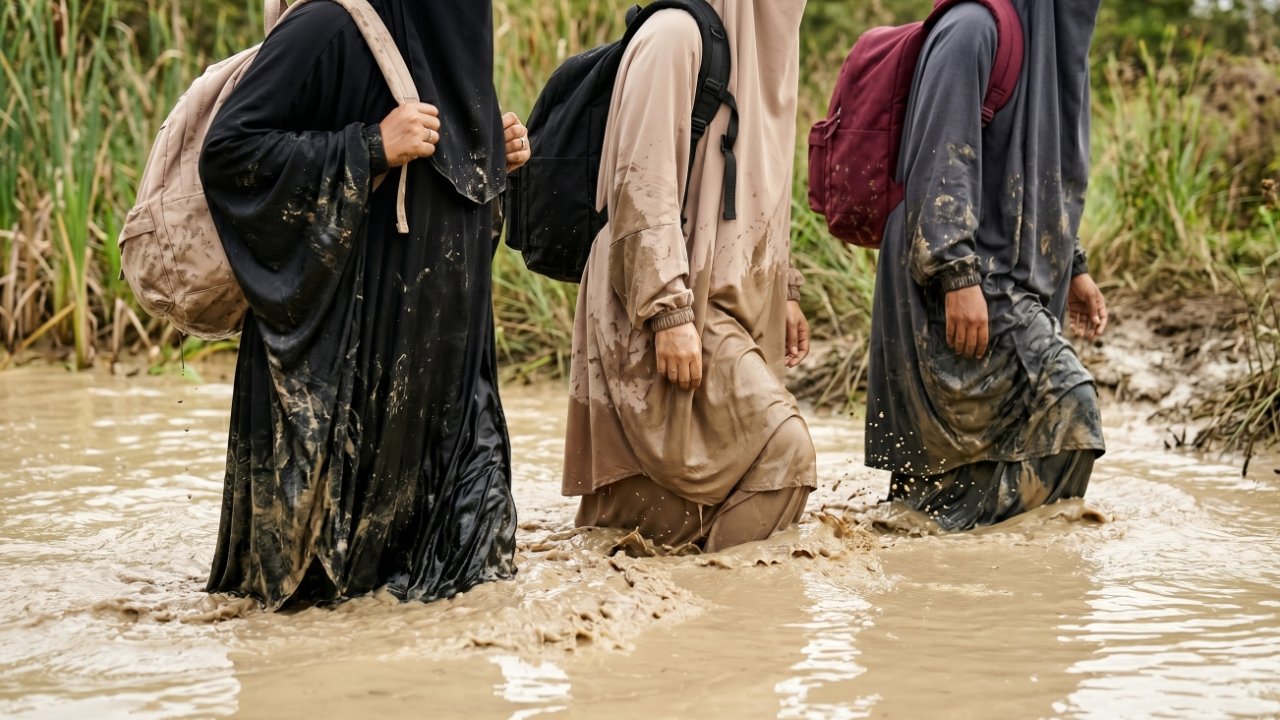
There is little more dispiriting than watching charities discover the Trials & Tribulations challenge, embrace its power, recognise its potential, and then decide it needs a brothers’ version too. They think they’re broadening appeal, being inclusive, and maximising impact. What they’re actually doing is diluting something that was never meant to be shared, wresting away a challenge designed specifically for and around Muslim women.
Sometimes it happens gradually: they run a successful ladies’ event, then add a brothers’ version the following year. Sometimes it happens immediately: they announce both versions from the start, as if the challenge were always meant to be equally distributed. Worst of all, sometimes they skip the ladies’ version entirely, handing the entire concept over to brothers as if women were never its intended heart.
I once watched a major charity lay the groundwork for a ladies-only event, posting it on social media where the response from Muslim women was overwhelmingly and beautifully positive. But then: nothing. The charity made no effort whatsoever to nurture that groundswell of enthusiasm, gave women no space to talk themselves into participation, and ultimately the event was cancelled. Shortly afterwards, a brothers-only version appeared, and the sisters were left watching from the sidelines of a challenge that was meant to be theirs.
This is not merely disappointing; it’s a failure to understand what you’re stewarding.
The patience required
Here’s what organisations so often fail to understand: Muslim women need time and space that men do not require, not because they’re less capable or less committed, but because their lives are structured differently. Their responsibilities are layered in ways that demand navigation, and saying yes to a physical challenge is rarely as simple as just signing up. They need time to arrange childcare, coordinate schedules and have conversations with family members who may not immediately understand why this matters. They need to see other women committing before they feel permission to commit themselves, and need reassurance that the event will actually happen, that their effort to participate won’t be wasted.
Instead of providing this time and space, organisations give up early. They mistake that necessary pause for lack of interest, interpret thoughtful consideration as disengagement, and hand all the keys to brothers who can sign up immediately because their lives permit immediacy in ways women’s lives often do not.
If only you would wait. If only you would nurture. If only you would do the harder work of genuine outreach rather than taking the easier path of defaulting to men.
Why this must remain theirs
The Trials & Tribulations challenge, not just a ladies’ version of it but the challenge itself, must remain centred on Muslim women. This isn’t arbitrary preference or outdated thinking but recognition that this particular challenge, with its specific combination of modest dress, fasting, physical obstacles, and solidarity with refugee women, was designed to address needs that sisters face in ways brothers don’t.
Yes, you could create a brothers’ version, and no doubt it would fill quickly. But in doing so, you’d transform the challenge from something with specific purpose into something generic: just another obstacle course that happens to involve fasting. You’d dilute its meaning, diffuse its focus, and most critically, communicate to Muslim women that even this space, designed specifically for them, must ultimately be shared.
In women-only events, participants can struggle without self-consciousness. They can grunt with effort, collapse in exhaustion, cry from difficulty, laugh at absurdity, and embrace their physicality without filtering it through awareness of being observed. They can be undignified in their striving, which is precisely where transformation happens, in that raw space where pretence falls away and only effort remains. When the challenge belongs entirely to them, not shared with a brothers’ version running alongside or in alternating years, the ownership is complete and the message is clear: this is yours, created for you, centred on your experience, unapologetically focused on your needs.
Men already have countless opportunities for physical challenges, countless spaces where their strength is expected and celebrated, countless events designed with their participation as the default assumption. Obstacle courses, charity runs, endurance events: brothers can choose from dozens of formats, none of which require the specific negotiation of modest dress, or carry the particular weight of solidarity with refugee women’s experiences, designed to counter narratives about what Muslim women can or cannot do.
Society already emphasises male physicality, validates masculine engagement with difficulty, and provides infrastructure for men to test themselves. Brothers don’t face the same barriers to participation that sisters navigate, nor need a challenge specifically designed to counter assumptions about their capabilities because those assumptions don’t exist in the same way. Brothers don’t need this particular challenge; let them find the many others available to them whilst this one remains what it was made to be: a challenge for sisters.
The community they create
Something happens when women gather for shared difficulty that cannot be replicated in mixed settings. A particular quality of encouragement emerges, a specific type of camaraderie, a bond formed through vulnerability that mixed groups rarely achieve. Women can celebrate each other’s achievements without competition’s sharp edges, encourage without posturing, and be genuinely present to each other’s struggles.
This is especially crucial in a world that too often pits women against each other, that teaches them to compete for limited attention and recognition. The Trials & Tribulations challenge offers different lessons: that there’s enough glory for everyone, that another woman’s strength doesn’t diminish your own, that supporting each other through difficulty creates something more valuable than individual achievement.
Studies confirm this: women perform better and participate more willingly in physical activities when supported by female peers. The network of encouragement that forms during a women-only challenge doesn’t just enhance the experience; it makes the experience possible for many who would never attempt it in mixed settings.
The work that creates transformation
Consider what genuine outreach requires. Reach out to husbands and ask them to nominate their wives, work with madrasahs to engage the mothers who gather there daily, tap into your female volunteer networks with genuine invitation, and market to student Islamic societies with creativity that speaks to women’s specific concerns and circumstances. Give women not just weeks but months to arrange their participation, create early bird incentives that allow commitment before details are finalised, and show them you’re serious about making this happen for them.
Understand that building a women’s event requires different timeline, different outreach, different patience than building a men’s event. This isn’t deficiency; this is reality, and working within this reality is part of your responsibility as organisers who claim to care about empowering Muslim women.
When you do this work well, creating genuine space for women to participate, and give them time and encouragement and proof of your commitment, watch what happens. The enthusiasm you saw in that initial social media response? That’s real. The interest is genuine, the desire to participate is authentic, and women want and need this challenge. They’ll rise to meet it if you rise to meet them where they are.
When they complete your course, muddy and exhausted and transformed, they’ll carry that experience back into their communities and their families, and even into their own self-understanding. They’ll know themselves differently and better understand what they’re capable of in ways that cannot be taught but only discovered through difficulty embraced and overcome. They’ll inspire daughters who watch them, sisters who hear their stories, friends who see their transformation. They’ll create ripples that extend far beyond your event, changing not just individuals but gradually reshaping what communities believe Muslim women can be and do.
This is what you make possible when you keep this challenge centred on the women it was designed for. This is the gift you steward when you refuse to hand it over to brothers simply because brothers are easier to reach.
Keep it theirs
Your role as organisers isn’t just to fill spaces or maximise participation numbers but to steward something with specific meaning and purpose. Sometimes stewardship means resisting the temptation to expand, duplicate, or offer “versions” for everyone. Sometimes care means saying no to brothers not because they’re unworthy but because this space was never meant for them, and adding them, even in separate events, dilutes what makes the challenge powerful.
When you protect the women-centred nature of Trials & Tribulations, resisting pressure to create a brothers’ versions, and keep the entire concept focused on the sisters it was designed for, you’re doing more than running an event. You’re making a statement about whose needs matter, whose experiences deserve specific attention, and whose empowerment is worth protecting even when expansion would be easier or more profitable.
May you have the wisdom to recognise this. May you have the courage to hold this boundary. May the events you create become spaces where Muslim women discover strengths they didn’t know they possessed, form bonds that outlast the mud and exhaustion, and carry home the knowledge that they’re capable of far more than the world has taught them to believe.
This is their challenge. Not their version of a challenge. Not the ladies’ option. Theirs.