The assumption that limits
When you envision participants gathering for Trials & Tribulations, what faces do you see? If you are honest — and honesty matters here — you likely picture younger women. Students perhaps, sisters in their twenties, bodies still unacquainted with the particular aches that accumulate across decades. Energy abundant, recovery swift, the kind of physical resilience that makes muddy obstacle courses seem like natural territory.
This assumption lives quietly in most charity challenges, unexamined and unchallenged. Youth holds the monopoly on proving resilience, on standing up for causes, on adventure itself. But why should this be so? Why should the women who have walked furthest through life be assumed least capable of walking further still?
Your task as organisers includes dismantling this assumption — not loudly or defensively, but through deliberate invitation. The sisters in their forties, fifties, sixties carry something the young cannot yet possess: the knowledge that the body’s limitations are real but not final, that discomfort is survivable, that courage often arrives not despite fear but because of intimate acquaintance with it.
Trials & Tribulations belongs to them as much as to any twenty-year-old. Perhaps more so, for they understand in their bones what younger sisters are only beginning to learn — that life asks much of us, that we are stronger than we believe, that solidarity sometimes requires walking into difficulty we could easily avoid.
What the years have purchased
Consider the woman approaching her fifth decade. She has likely spent years — perhaps the majority of her adult life — focused outward. Raising children who demanded everything. Balancing work that never quite balanced. Caring for aging parents, managing households, supporting husbands, serving communities. Always the one attending to others’ needs whilst her own waited patiently, perpetually deferred.
Now you offer her something different: permission to step forward for herself whilst simultaneously serving a greater cause. This is no small gift. The Trials & Tribulations challenge becomes the rare space where self-care and service intertwine, where proving something to herself and standing with refugees are not competing priorities but complementary truths.
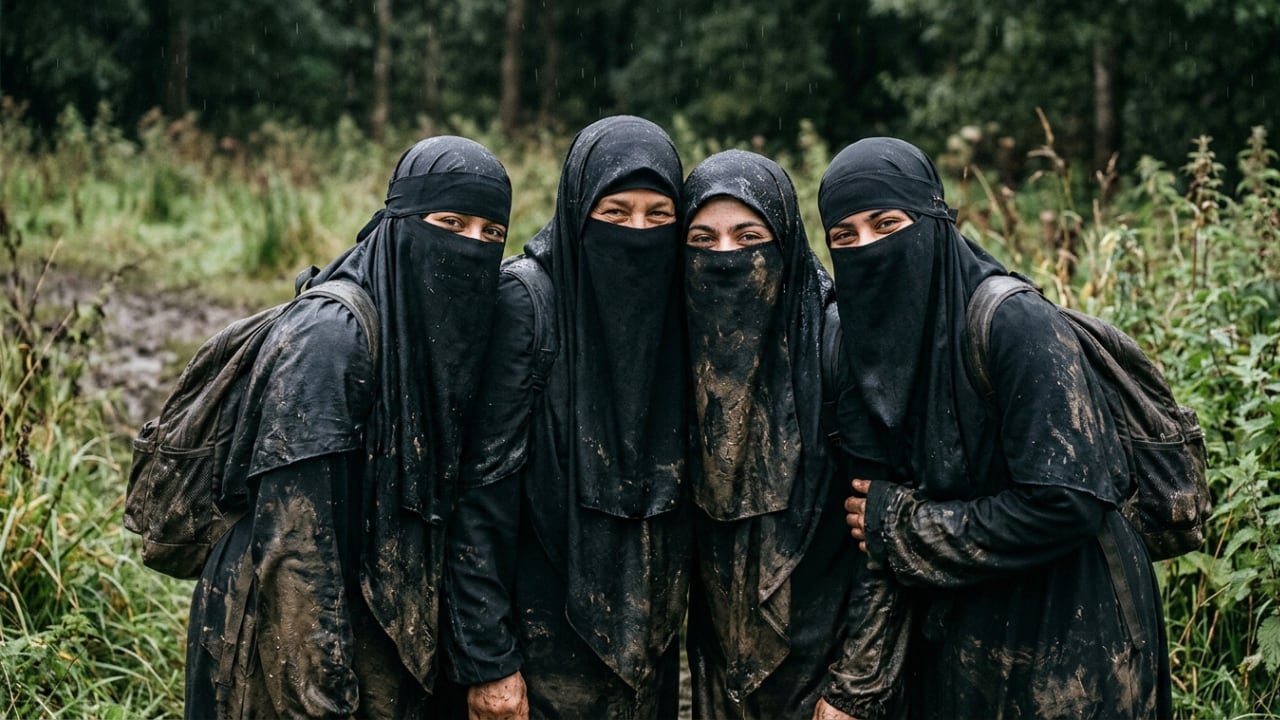
When she walks that muddy course in full Muslim dress, fasting whilst her body protests, she sends a message that reverberates in multiple directions. To herself: I am still capable, still strong, still willing to push beyond comfort’s boundaries. To her community: age is no barrier to courage, to determination, to solidarity made visible through sacrifice. To the refugees for whom she walks: your struggles are seen by women across generations, your dignity matters to grandmothers as much as to daughters.
This is powerful precisely because it defies expectation. When an older woman completes what many assume belongs to youth alone, she doesn’t merely participate, but transforms understanding itself.
The gift of intergenerational witness
Encourage the sisters in your community to bring their families into this experience. When a mother takes on the challenge alongside her daughter, or a grandmother walks beside granddaughters, something shifts. The event becomes not just individual endeavour but family testimony, generations bound by shared struggle and purpose.
For children and young adults, witnessing their mothers and grandmothers step into difficulty carries lessons no lecture can convey. They see that courage is not the province of youth alone, that faith demands action at every stage of life, that their own futures need not narrow with passing years. They learn that women in their families are not merely caregivers and managers of domestic life but individuals capable of choosing challenge, of pushing limits, of surprising even themselves.
And when that mother or grandmother completes the course — muddy, exhausted, radiant with accomplishment — the young women watching absorb a truth they will carry forever: this is possible for me too, not just now but always, not just in youth’s first flush but across decades yet to come.
As organisers, you can actively foster these intergenerational groups. Suggest that mothers invite daughters, that aunties recruit nieces, that the sisters who hesitate might find courage in numbers. Create space in your communications for family participation, for the particular beauty of generations walking together through mud and meaning.
The inspiration that ripples outward
When women in their forties, fifties, sixties step up to Trials & Tribulations, they become involuntary teachers. Not through words but through presence, through the simple fact of showing up when many their age choose comfort over challenge, familiarity over risk.
Other women watch. Those who assumed their own adventuring days had passed, that charity challenges belonged to daughters rather than mothers, that certain physical demands were no longer appropriate or achievable. When they see their peers — sisters their own age, carrying similar histories of childbirth and childcare and the body’s slow accumulation of wear — completing the course, something shifts in what they believe possible.
This is how change propagates: not through argument but through example, not through convincing but through witnessing. Each older woman who participates gives permission to ten others who were waiting, uncertain, doubtful. She proves through her own body that age is not disqualification, that this challenge welcomes them too.
You are not just organising an event. You are creating conditions for this rippling inspiration, for the quiet revolution of older women reclaiming adventure and purpose at stages of life when society suggests they should be settling into invisibility.
The message they send by participating cuts through stereotypes about Muslim women at every stage of life. They demonstrate that solidarity and compassion have no expiry date, that strength takes many forms, that the willingness to stand with those who suffer is not diminished but perhaps deepened by decades of living.
The particular gifts they bring
Younger participants bring energy, enthusiasm, the particular fearlessness of those who have not yet learned all the ways bodies can fail them. This is valuable and needed. But older women bring different gifts, equally necessary.
They bring perspective. They have weathered difficulties before: childbirth perhaps, illness, loss, the countless smaller trials that accumulate across years. They know that discomfort passes, that the body recovers, that what seems impossible in the moment often reveals itself as merely difficult. This knowledge steadies them through the challenge and steadies others who walk alongside them.
They bring patience with their own limitations. Where younger sisters might push recklessly, older women often move with deliberate care, honouring what their bodies tell them whilst still choosing to continue. They model how to be appropriately cautious without being defeated by caution, how to respect age’s realities without being defined by them.
They bring hard-won faith. Decades of prayers answered and unanswered, of trials endured and lessons learned, of returning again and again to Allah when life stripped away certainties — this creates spiritual resilience that cannot be taught, only lived into. When the course grows difficult, when fasting compounds exhaustion, when doubt whispers that they should stop, they draw on wells of faith that run deep.
As organisers, recognise these gifts explicitly. In your communications, in your encouragement, in how you frame the challenge itself, make clear that you are not merely tolerating older participants or grudgingly including them. You are actively welcoming the wisdom they carry, the perspective they offer, the particular strength that only years can forge.
Health, safety, and honest limits
Your responsibility includes ensuring that enthusiasm does not override prudence. Some older women will be perfectly capable of completing the full challenge. Others may need modifications. A few — those with serious medical conditions or significant mobility limitations — may not be suited for participation at all, and this too must be acknowledged without shame.
Encourage all participants, but especially older ones, to consult with their doctors before committing. Frame this not as assuming frailty but as exercising appropriate wisdom. The aim is challenge, yes, but challenge that remains achievable, that tests without endangering.
Be prepared to offer modifications for those who need them. Perhaps a shorter route option. Perhaps permission to walk rather than run certain sections. Perhaps checkpoints where participants can choose to continue or conclude their journey with dignity rather than defeat. Create space for women to honour their limitations whilst still participating meaningfully.
Make clear in all your communications that this is about solidarity and sacrifice, not speed or athletic prowess. No one is racing. No one is competing. The woman who completes the course at seventy walking slowly is no less accomplished than the twenty-year-old who runs through it. Both have chosen difficulty when ease was available. Both deserve honour.
This balanced approach — welcoming older participants whilst acknowledging that bodies differ, that limitations are real, that wisdom includes knowing when to modify or decline — allows you to be both encouraging and responsible. You are not gatekeeping based on age, but neither are you recklessly dismissing legitimate concerns.
The invitation you extend
So when you gather your community, when you begin recruiting participants, extend your invitation across generations. Do not assume that the sisters with grey threading through their hijabs will decline, that the mothers of teenagers have moved past the stage of taking on challenges, that the grandmothers in your congregation are too old for adventure.
Invite them specifically. “This is for you too. Your courage, your solidarity, your witness: we need these. The young women in our community need to see you step forward. The refugees for whom we walk need to know that women across all stages of life stand with them.”
Frame participation as strength made visible, as faith enacted, as the natural continuation of lives already marked by endurance and sacrifice. They have walked difficult paths before — through childlessness, childbirth and child-rearing, through grief and uncertainty, through the particular trials that mark women’s lives in communities and families. This challenge is simply another path, one they choose rather than one chosen for them.
Tell them plainly: “Age is not a barrier. It is a strength. The years you have lived, the difficulties you have weathered, the faith you have forged through trial: these prepare you for this journey. We welcome you. We need you. Come, walk with us.”
What their participation creates
When older women take on Trials & Tribulations alongside younger sisters, the event gains depth it cannot otherwise possess. The contrast itself teaches: youthful energy beside hard-won endurance, first adventures beside continued ones, those just learning their strength beside those who have proved it repeatedly across decades.
The younger participants gain unexpected mentors. Not mentors who instruct with words but who teach through presence, through how they handle discomfort, through the particular grace of continuing when the body begs to stop, through faith made visible in aging limbs that keep moving forward.
The older participants discover that their adventuring days are not behind them but simply evolving. They prove to themselves what society tried to tell them was impossible: that they remain capable, relevant, strong. They reclaim something precious: the sense that life still holds challenges worth rising to, that their bodies still serve purposes beyond maintenance and management, that courage and purpose are not the exclusive territory of youth.
Your community witnesses women across generations standing together in solidarity with refugees, and this witness changes understanding. Compassion becomes not a young person’s enthusiasm but a principle that spans lifetimes. Sacrifice is revealed as ageless. The willingness to walk into difficulty for others’ sake emerges as the natural fruit of faith matured rather than faith’s first enthusiastic bloom.
You are not just filling participation slots. You are weaving together generations, creating space where age differences enrich rather than divide, where the young and old teach each other through shared struggle, where everyone discovers that resilience and empathy and faith belong to all of us — always, at every stage, without exception or expiry.
This is the gift you steward when you welcome women across generations into Trials & Tribulations. May you extend that invitation widely. May the sisters who have walked furthest through life hear your call and recognise it as meant for them. May they arrive on Friday evening and walk into Saturday’s challenge carrying the particular strength that only years can forge. And may everyone who witnesses them be changed.