Bringing the groups together
This section covers how to invite groups, agree terms and keep everyone safe and informed. The groups are your partners, not just participants, so treat them that way.
Inviting groups
Start with people you already know: society presidents, school leaders, youth workers and mosque or community centre contacts. A warm personal message works better than a mass email. Offer a short call or visit to answer questions.
Aim for a spread, such as four to eight teams from different places. Too few feels flat. Too many is hard to run well the first time.
A simple agreement
Put a short written agreement in place with each group. It protects them, you and the people you raise money for. It should cover:
- What the group will do: appoint a captain, form a team, fundraise and follow the event rules
- What your charity will do: provide the event, safety, giving pages and clear updates
- How money is raised and passed on, and which cause it supports
- How the group may use your charity’s name and logo
- Safeguarding, photography and data protection
Keep it to a page or two, in plain words.
Team captains
Each team needs a captain. Their job is to be the link between you and the team. They share information, collect forms and raise concerns early. Hold a short online call for captains a few weeks before the day, and another a week before.
Team identity
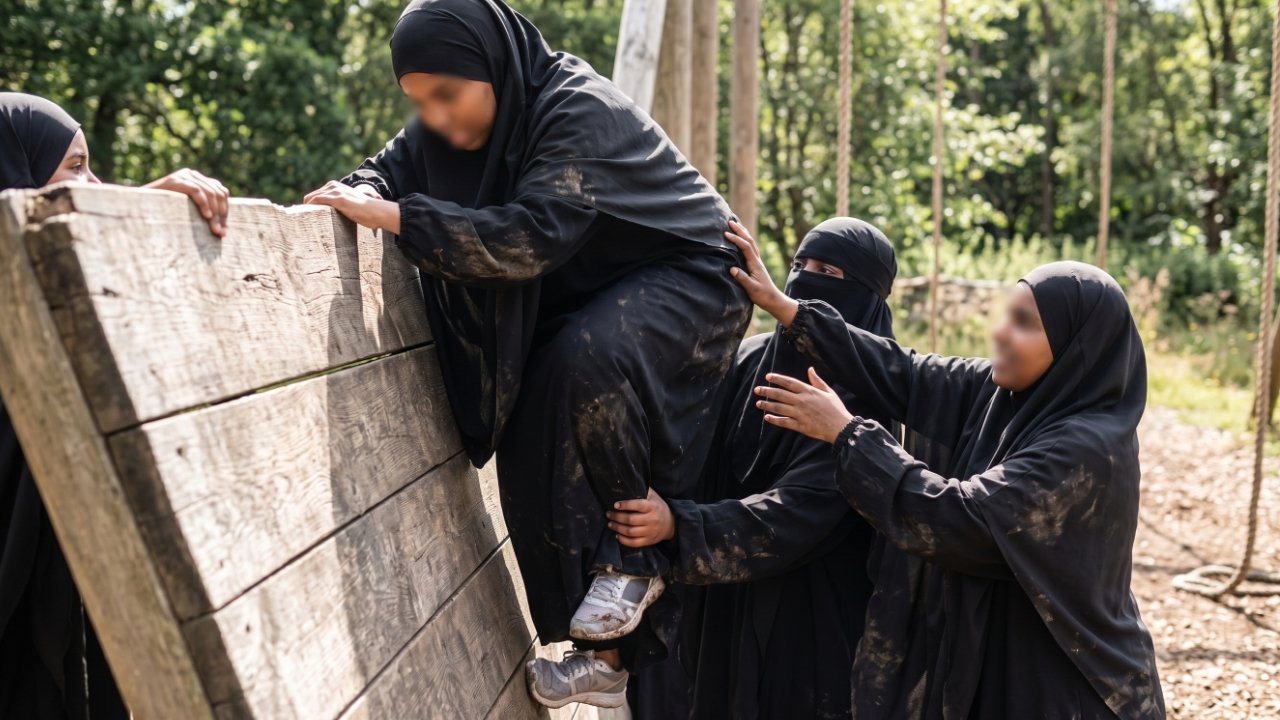
Each team picks a colour and a name. Matching hijabs (headscarves) in the team colour make teams easy to spot on the course and look wonderful in photographs. Outfits can match too, provided they stay modest and practical. Let teams choose their own look, and check colours do not clash between teams.
Registration
Keep registration simple and in a fixed order.
- The captain registers the team online with names and contact details.
- Each participant completes a consent and medical form.
- For under-18s, a parent or guardian signs consent.
- Each participant gives an emergency contact.
- You confirm every form is in before the final week.
Store all personal data securely and only for as long as you need it.
Safeguarding under-18s
If any participants are under 18, safeguarding must be built in from the start. It is a legal and moral duty, not a formality.
- Set clear age bands, and decide whether younger girls take part in a separate division
- Make sure every team has enough trained adults, in line with your safeguarding policy and your provider’s rules
- Check that adult volunteers have the right checks for their role
- Ask schools to share their own risk assessment and consent processes
- Name a safeguarding lead for the day, and make sure everyone knows who they are
For schools, treat refugee experiences with care. Some pupils may have personal or family experience of displacement. Brief teachers beforehand and avoid asking anyone to share their story.
Photos and privacy
Some participants will not want their image shared, for good reasons. Ask for photo consent on the registration form, and honour it. Where you can, use women-only photographers, and keep changing areas free of cameras.
With your teams in place, the next job is raising the money.