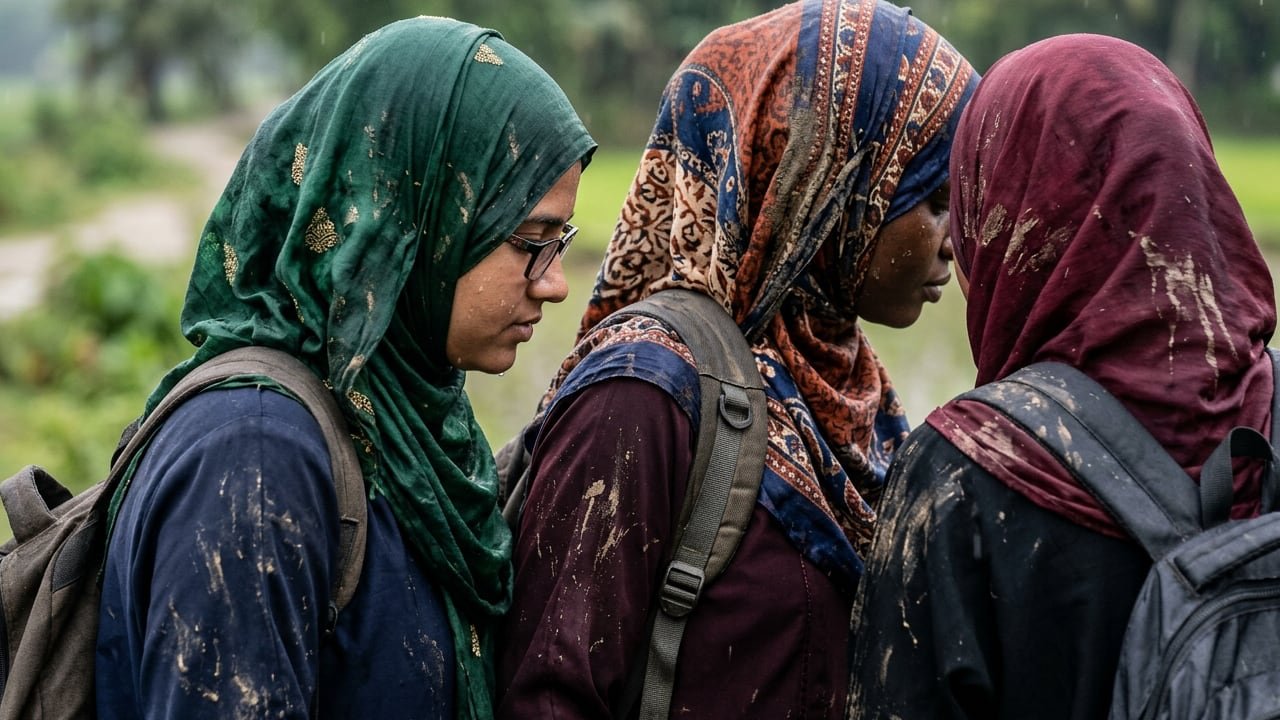
There is a sister who stands at the edge of commitment. She hears about the Trials & Tribulations challenge and feels not excitement but apprehension, imagining the cold water, the mud, the exhaustion of fasting whilst walking for hours. Everything in her that prefers comfort whispers: Perhaps not this time. Perhaps this is not for you.
As organisers, you will meet this reluctance often — in potential participants, in community members you approach, in sisters who want to support the cause but hesitate at the prospect of actually undertaking the challenge. The temptation is to overcome it quickly, to persuade, to reframe the difficulty as adventure or personal growth opportunity, and then move on to someone more obviously enthusiastic.
Resist that temptation. The reluctant sister is not a pastoral problem to manage on the way to easier recruits. She is, if you’ll invest the effort to reach her, your greatest asset — the participant most likely to be transformed by the experience, and very often the one who raises the most sponsorship.
Experienced organisers have noticed a pattern: the sister who signs up without hesitation completes the challenge, feels good, and moves on. But the sister who needed three conversations before she said yes — the one who arrived that morning still half-convinced she’d made a mistake — tends to do something different afterwards.
She talks about it, and she can’t stop talking about it. Her sponsors, who watched her wrestle with the decision, find themselves moved in a way they hadn’t expected, and they give more generously than they’d planned. Her reluctance, visible and honest, becomes the story that opens wallets and changes minds. Don’t let her walk away unasked.
Nobody wants to be a refugee
Here is the truth her reluctance reveals: in the real world, nobody wants to wade through freezing seas or walk for days without food or shelter. Refugees don’t choose these hardships as opportunities for personal transformation. They endure because alternatives are worse: because staying means death while moving means merely the possibility of death rather than its certainty.
The reluctant participant grasps this instinctively. Her hesitation comes from accurate assessment: this will be hard, it will hurt, it will push her past comfortable limits. She knows she is choosing discomfort others cannot avoid, that her difficult day mirrors journeys lasting weeks or months or years. Her reluctance already connects her to refugee reality more honestly than easy enthusiasm could.
This is the foundation genuine solidarity requires: not imagining we comprehend refugee experience through brief simulation, but recognising the vast gulf between chosen difficulty and imposed suffering whilst still insisting that choosing difficulty matters, that embodied empathy — however inadequate — is better than comfortable distance.
When reluctance becomes sacrifice
When the sister who does not want to participate does so anyway, her act carries profound weight. She is not seeking personal achievement or fitness goals. She is sacrificing comfort despite every instinct arguing against it, and this mirrors what refugees do: persisting not because they are especially strong but because they must, because stopping is not an option.
The mum who would rather stay home but still wades waist-deep into cold water demonstrates something truer than athletic accomplishment ever could. She shows that solidarity costs comfort, that standing with refugees means choosing echoes of their unchosen hardships, that courage is not the absence of reluctance but persistence through it.
This is meaningful in ways that easy completion cannot be. The sister who finds the challenge manageable gains satisfaction but perhaps not revelation. The sister who completes it whilst finding it nearly unbearable gains proof that she can endure what feels unendurable, knowledge of persistence when everything argues for surrender. This transforms her understanding of both her own capacity and refugee resilience.
Reluctance keeps the challenge honest
The athletic sister who completes obstacles with ease might inadvertently suggest that refugee experiences require only fitness and determination to overcome.
But the reluctant sister who struggles with every obstacle, who needs help and who finishes last but finishes nonetheless — she teaches something essential: that refugees persist not because they are exceptional but because they have no choice, that survival is not testimony to special character but to desperate necessity.
This is pedagogically invaluable. Her visible struggle reminds everyone present that the challenge is not about personal accomplishment.
Her difficulty makes visceral what the day is meant to teach: that displacement is not adventure, that the hardships embodied here are real hardships however temporary, that those who endure should not have to prove themselves worthy through their endurance.
Whilst enthusiastic participants bring necessary energy, reluctant participants keep the focus where it belongs — not on what we achieve but on whose struggles we honour.
Speaking to the reluctant sister
When the hesitant sister expresses her concerns, resist the urge to dismiss them. Do not tell her the challenge is easier than she thinks or promise it will be fun. Instead, honour what she already knows:
“You’re right — this will be difficult. You will be cold and tired and uncomfortable. Your reluctance comes from accurate understanding of what this challenge demands.”
Then help her see that her hesitation qualifies rather than disqualifies her:
“But consider: refugees don’t want to face their journeys either. They have no choice. Your reluctance shows you understand this. Because you do not want to do this, your choosing to do it anyway becomes more meaningful. You will not be doing this because it is easy. You will be doing it because it matters.”
Frame her participation as the embodied prayer it is:
“Every step you take, even reluctantly, stands with refugees. Your discomfort echoes theirs. Your choosing to continue despite wanting to stop mirrors their forced persistence. This is solidarity: not claiming to understand their experience, but refusing to remain at a comfortable distance from it.”
For organisers
Welcome reluctance as wisdom rather than weakness, and invest the effort that reaching reluctant sisters requires — the extra conversations and encouragement, the explicit permission to rest or accept help on the day. It’s worth it.
For the sister who arrives half-convinced she’s made a mistake and finishes anyway will remember that she was reluctant and participated regardless, and this memory becomes a resource.
In future moments when her own difficulties feel overwhelming, she may think of refugees when perspective is needed. She will remember that she chose temporary discomfort whilst they endure permanent displacement, and that remembering might humble her, might keep alive the empathy that one muddy day helped cultivate.
The challenge needs both enthusiastic and reluctant participants, but understand this: it is often the reluctant sister — cold, tired, persisting despite every instinct suggesting surrender — who most honestly reflects what refugees endure.
She is the one who is most deeply changed by the experience, and who carries the story that moves her community to give. Her struggle is not failure to achieve. It is faithful witness to the cost of displacement, embodied prayer for those forced to persist, and visible testimony that some things matter more than comfort.
Do not give up on the reluctant sister. Seek her out. She is the whole point.
May every reluctant sister who says yes despite her hesitation be blessed. May her struggle be honoured. May her persistence teach what enthusiasm cannot. May she finish knowing she has offered exactly what the challenge asks: embodied empathy, chosen discomfort, and solidarity that costs something real.