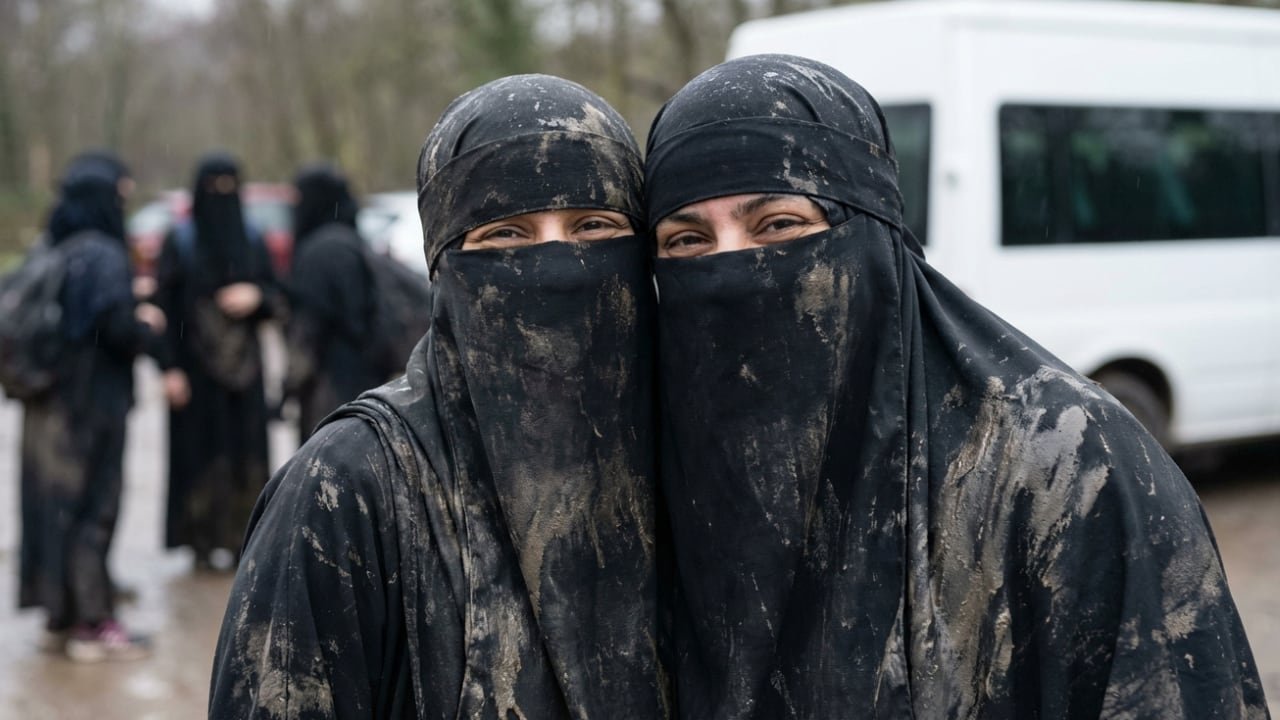
When you bring women together for Trials & Tribulations, you offer more than a sponsored challenge. You offer a threshold moment: a crossing point where assumptions about capability meet the raw reality of what bodies and spirits can endure. The women who arrive here may not yet know what they are capable of. By the time they reach journey’s end, muddy and exhausted and strangely light, they will carry knowledge that no classroom could teach and no lecture could convey.
This is what transformation looks like: not dramatic revelation but quiet discovery, written in aching muscles and unexpected laughter, in the moment a hand reaches down to pull them over a wall, in the breath they catch when they realise they have walked further than they thought possible whilst fasting in full modest dress. The lessons they learn extend far beyond physical fitness, reaching into the territory where faith and identity and self-understanding converge.
Discovering strength they did not know they carried
For many of your participants, Trials & Tribulations will be their first encounter with such demanding physical activity. They arrive carrying the common assumption that their bodies are not made for this — that strength and endurance belong to others: to athletes, and to women who look different, dress different and live different lives.
The challenge shatters this assumption with every obstacle overcome.
When a woman pulls herself over a wall she was certain would defeat her, when she wades through mud that tries to steal her boots, when she keeps walking despite legs that tremble and lungs that burn, she discovers something profound. Strength was there all along, waiting to be called upon, dormant but not absent. The empowerment that follows this discovery is not abstract. It settles into her bones, into her understanding of who she is and what she can accomplish.
This aligns beautifully with Islamic teaching that emphasises women’s strength and resilience. The faith has never taught that women are fragile creatures requiring constant shelter from difficulty. From Khadijah who ran a business empire to Aisha who led armies, from Fatimah whose strength under hardship became legendary to Nusaybah who fought at Uhud — Islam recognises what your participants discover on the trail: that women possess depths of capability that surface whenever called upon.
Help them see this connection. Their physical achievement during the challenge reflects a spiritual truth their faith has always affirmed. They are not proving something new but remembering something forgotten: that strength and modesty, capability and faith, are not opposites but companions on the same journey.
The sisterhood that forms in struggle
Watch what happens when your participants face obstacles together. The competitive instinct that might dominate other athletic events gives way to something richer: women helping each other over walls, offering encouragement when energy flags, celebrating each other’s small victories as though they were their own.
This collaborative spirit mirrors the Islamic emphasis on sisterhood within the ummah. Our tradition speaks of believers as a single building, each brick supporting the others. Your participants live this metaphor literally as they navigate the course, each woman both strong enough to continue and humble enough to accept help when she needs it.
The friendships formed during such shared struggle carry a particular depth. There is something about facing difficulty together that strips away pretence, that reveals character, that creates bonds difficult to forge in easier circumstances. Women who arrived as strangers leave as sisters, connected by the memory of mud and laughter and the moment someone’s hand reached down when their own strength faltered.
This community-building matters especially for Muslim women, who may feel isolated in broader society, who may lack spaces where they can be fully themselves — visibly Muslim and physically active, modest and adventurous, faithful and strong. You create that space. You make possible the discovery that these identities need not conflict, that community forms naturally when women are given opportunity to be whole.
Learning what resilience actually means
The challenging nature of Trials & Tribulations teaches resilience in ways that are both immediate and lasting. Physical exhaustion arrives early and intensifies with every obstacle. Mud clings and weighs down movement. Mental barriers whisper suggestions to quit, to walk away, to accept that this is too hard. Fasting adds another layer: the hollow feeling in stomachs, the dry throat, the body that wants water and cannot have it.
Through all this, they continue. They learn that resilience is not the absence of struggle but the choice to persist within it.
This mirrors struggles they face in daily life, where resilience is often key to overcoming personal and societal challenges. The sister navigating workplace discrimination. The mother balancing competing demands with grace she does not always feel. The student pushing through doubt about whether she belongs in spaces that were not designed to welcome her. They all practise the same resilience they discover on the trail: the stubborn continuation when circumstances argue for surrender.
In Islam, we call this sabr — patience, perseverance, steadfastness in the face of difficulty. It is not passive acceptance but active endurance, not resignation but determination to hold fast to faith and purpose regardless of what comes. The muddy experience of Trials & Tribulations becomes a practical application of this principle, making abstract virtue concrete and immediate.
Help your participants recognise this connection. When they want to give up but choose to continue, they are practising sabr. When they accept help without shame and offer help without condescension, they are practising sabr. When they finish despite exhaustion, they have demonstrated what sabr actually means: not superhuman strength but human persistence, the choice to keep going when the going is hard.
Prioritising health as worship
For many of your participants, training for and completing Trials & Tribulations will shift how they think about health and fitness. What began as preparation for a single event may evolve into a lifestyle centred around wellbeing, self-care, and the understanding that their bodies deserve attention and respect.
This shift aligns with Islamic teaching that advocates for preserving health as both blessing and responsibility. The Prophet Muhammad ﷺ taught that the body has rights over us, that we are accountable for how we treat the physical forms we have been given — a teaching that frames health not as vanity but as stewardship, as recognition that these bodies are trusts from Allah, to be maintained with the same care we would give anything precious entrusted to our keeping.
When your participants discover they can be both modest and active, both faithful and physically strong, it challenges false binaries that sometimes emerge in Muslim communities — the idea that focusing on physical health is somehow less spiritual than focusing only on prayer and study. Islam recognises no such division. The same faith that calls us to salah five times daily also calls us to care for our bodies, to maintain the strength and health that allows us to serve Allah and His creation.
Encourage this understanding. Help participants see that their commitment to training, their choice to prioritise fitness, their pleasure in physical capability: all of this can be worship when done with proper intention. They are not being vain or worldly. They are being good stewards of what Allah has entrusted to them.
Challenging stereotypes through visible faith
When your participants navigate the course in hijabs and abayas, they challenge stereotypes simply by being present. The image many carry of Muslim women involves passivity, restriction, separation from mainstream activities. But here they are, squelching through mud, climbing over obstacles, running and laughing and pushing their bodies to limits, all whilst maintaining the modesty their faith requires.
This visible defiance of stereotype matters. It demonstrates that modesty and athleticism are not opposites, that faith and physical challenge can coexist, that Muslim women can embrace both their religious identity and their capacity for strength and endurance. By showing up in full modest dress and fully engaging with the physical demands of the challenge, they reshape perceptions about what Muslim women can do and be.
This is dawah of a particularly powerful kind — not arguing for Islam’s reasonableness but demonstrating it, not explaining that Muslim women are capable but proving it through action. Those who see them on the course —f ellow participants, spectators, marshals — will carry away an image that contradicts comfortable stereotypes. Some will be inspired. Some will be challenged. All will have witnessed something that does not fit the narrow narratives often told about Muslim women.
As an organiser, you facilitate this. By creating a space where women can be visibly Muslim and visibly strong, where modest dress and physical challenge coexist naturally, you help shift the cultural landscape. Each participant who completes the course whilst wearing hijab and abaya becomes living testimony that the false choice between faith and physical capability is exactly that: false.
Finding spiritual meaning in physical struggle
Finally, and perhaps most importantly, the physical challenge of Trials & Tribulations serves as a form of spiritual reflection. The obstacles faced become metaphors for life’s trials, reminding participants of the importance of faith and reliance on Allah in overcoming difficulties.
When they face a wall that seems too high, when mud threatens to stop their progress, when exhaustion argues that they cannot continue — and then they find a way forward anyway — they experience in their bodies what their faith teaches about difficulty and divine help. The Qur’an promises that with hardship comes ease, that Allah does not burden a soul beyond its capacity, that He is near to those who call on Him. These truths become immediate and real when lived through physical struggle.
Encourage your participants to approach the challenge with this spiritual awareness. The obstacles are not merely obstacles, but are also teachers. The exhaustion is not merely exhaustion: it is a reminder of human limitation and divine sufficiency. The moment they overcome something they thought would defeat them is not merely athletic achievement: it is demonstration of the principle that with Allah’s help, more is possible than we imagine.
This connection between physical and spiritual struggle is deeply Islamic. The Prophet Muhammad ﷺ and his companions faced extraordinary physical hardships — battles, journeys, migrations, hunger, thirst — and consistently framed these experiences in spiritual terms. Physical difficulty became opportunity for spiritual growth, bodily suffering became avenue for deepening faith, earthly trials became preparation for eternal realities.
Your participants walk in this tradition when they choose to fast whilst facing physical challenges, when they maintain modesty despite the practical difficulties it adds, when they approach the whole experience not merely as athletic event but as spiritual practice. Help them see this. Help them understand that their muddy struggle on British hillsides connects them to a long heritage of believers who found Allah closest in moments of greatest difficulty.
The gift you offer
When you organise Trials & Tribulations, you offer Muslim women something rare and valuable: a space where they can be wholly themselves, where faith and physicality integrate seamlessly, where strength and modesty coexist naturally, where struggle becomes opportunity for transformation.
The women who arrive at the start carry assumptions about their limitations. By the time they break their fast at sunset, many of these assumptions will have been left behind in the mud. They will have discovered strength they did not know they carried. They will have experienced the power of sisterhood formed in shared struggle. They will have learned what resilience actually means. They will have reframed health as worship. They will have challenged stereotypes simply by being present. They will have found spiritual meaning in physical difficulty.
These lessons will extend far beyond the single day of your event. They will shape how participants think about their capabilities, their faith, their bodies, their relationships with other Muslim women. Some will continue training, embracing physical fitness as ongoing practice. Some will volunteer at future events, wanting to offer others what they themselves received. Some will carry the memory of what they accomplished as quiet confidence that surfaces in other challenging moments — the reminder that they are stronger than they sometimes believe, that with faith and persistence and sisterhood, more is possible than they imagined.
This is the transformation you make possible. This is the gift you offer. May it bear fruit in ways you cannot measure, rippling outward through communities, inspiring others to discover their own strength, creating spaces where Muslim women can be fully who Allah created them to be: strong and modest, faithful and capable, whole.