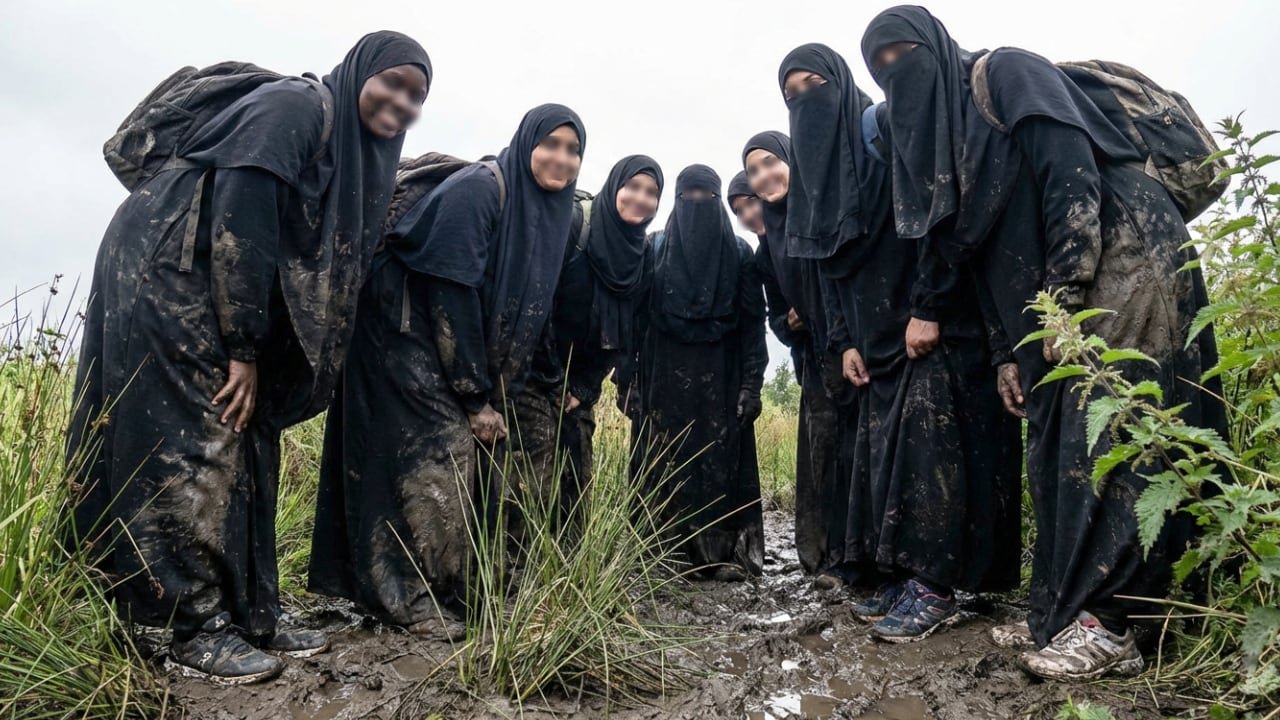
You know each other’s voices in the dark. Thursday evenings in the masjid’s upstairs room, or Friday afternoons in Safeeyah’s front room with tea going cold as conversation deepens. Sometimes you’re five, sometimes twelve, sometimes just three when life gets complicated and childcare falls through and work demands everything. But you keep gathering because this circle holds something you can’t find elsewhere: sisters who know your struggles without needing the full story, who pray for you between meetings, who text at odd hours when anxiety won’t sleep.
Your halaqa already carries spiritual weight. You study together, support each other through divorce and disease and doubt, celebrate when someone’s child memorises their first surah, bring casseroles when new babies arrive. You’ve cried together over verses that cracked you open, laughed until your sides hurt over the absurdities of trying to live faith in a world that doesn’t understand it. You’re already bound by something deeper than friendship: by shared devotion, by the commitment to keep showing up even when it’s hard.
What if you took that bond somewhere unfamiliar? What if the sisters who pray together chose to struggle together. Not metaphorically, but in mud and rain and the stubborn resistance of your own bodies saying “enough”?
The call comes to small circles
Trials & Tribulations isn’t designed for masses or strangers. It’s built for groups like yours — sisters who already know each other’s capabilities and vulnerabilities, who can speak honestly about fear and faith, who trust each other enough to be witnessed in difficulty. The challenge works precisely because it asks you to step outside comfort together, to choose displacement as pedagogy, to let physical struggle teach what lectures cannot.
This invitation arrives not to your entire community but to your halaqa specifically. To the circle that meets in the community centre on Saturday mornings. To the informal gathering of mums who linger after school pickup. To the young professionals who share iftar during Ramadan and text throughout the year. To the converts who found each other and built something precious from shared determination to understand this deen deeply.
Someone among you will need to lead. Not because she’s the fittest or most confident, but because she hears this call and cannot unhear it. Perhaps you’re reading this now and recognising yourself — the sister who often suggests new books for the halaqa to study, who messages everyone when meetings change, who quietly holds the group’s rhythm. Or perhaps leadership will surprise you, emerging from the quiet one who’s been listening for months, who suddenly speaks and everyone leans forward because when she talks, it matters.
Whoever leads needn’t do everything. You’ll need two or three sisters willing to organise: to book the venue, arrange transport, communicate with everyone. The rest of your circle supports by participating, by showing up, by trusting that this difficulty serves something beyond itself.
Your halaqa already contains what’s needed
Look around your circle. You already possess everything required to make this happen.
You know each other’s circumstances. You understand that Fatima’s husband needs convincing but respects religious commitment. You recognise that Khadija seems fragile but possesses surprising steel when she chooses to show it. You know Maryam trains regularly and will finish first, and you know Zainab hasn’t exercised since her last pregnancy and will need encouragement just to attempt this. This knowledge is precisely what makes your halaqa the perfect container for this challenge.
You speak the same spiritual language. When you frame the challenge as embodied empathy with refugees, as choosing temporary displacement to understand permanent exile, your sisters don’t need convincing. They already understand that faith sometimes demands discomfort, that spiritual growth often arrives through difficulty, that abstract empathy fails where embodied solidarity teaches. Your Thursday evening discussions have prepared you for this. The challenge becomes the logical next step in conversations you’re already having.
You hold each other accountable with love. When someone wants to quit, you know whether she needs encouragement to persist or permission to stop. You recognise the difference between productive discomfort and harmful pushing. You can say “this is hard but you can do it” or “it’s okay to walk instead of run” and know which your sister needs to hear. This discernment comes from time spent together, from witnessing each other through various trials already faced.
The journey from conversation to commitment
Start where you always start: in conversation. At your next gathering, raise the possibility. Don’t present it as decided but as something worth considering together. Share what drew you to this challenge: the embodied solidarity with refugees, the spiritual dimension of choosing difficulty whilst fasting, the chance to discover what your bodies can endure when your souls commit.
Let the discussion breathe. Some sisters will immediately say yes. Others will hesitate, naming legitimate concerns: fitness levels, family obligations, fear of failure, uncertainty about whether this aligns with their own spiritual path. Honour these hesitations. They’re not obstacles to overcome but wisdom to incorporate. The sister who voices doubt often speaks for several others who stayed silent.
As you talk, practical questions will emerge. Which venue serves your purposes? Can everyone reach it? What date works best? Who’ll coordinate logistics? These questions aren’t separate from spiritual preparation — they’re the material expression of commitment. Booking the minibus becomes an act of faith. Choosing the date requires trusting that this matters enough to prioritise.
Give yourselves time. Don’t expect immediate consensus. Perhaps you discuss it over several gatherings, letting the idea settle, seeing who it calls and who it doesn’t. Maybe you start by reading some of our blog posts together, using it as a focal point for reflection. Some of your deeper halaqa discussions might organically connect, when you study verses about hijrah, about the Prophetic journeys through difficulty, about choosing hardship for Allah’s sake. These conversations prepare ground where commitment can take root.
From your front room to muddy ground
The weeks before your challenge can deepen your halaqa’s regular rhythms rather than disrupting them. Your spiritual discussions gain new urgency when you know difficulty awaits. Sabr stops being abstract when you’re anticipating the moment your body wants to quit but your commitment says continue. Tawakkul becomes concrete when you’re trusting Allah to carry you through obstacles you’re not certain you can manage alone.
You might adjust your meetings to include practical preparation alongside spiritual discussion. Perhaps you walk together after one session, testing your stamina, discovering what modest sportswear actually works for movement. Maybe someone who’s done similar challenges before shares what helped her, what she wishes she’d known. These preparations aren’t separate from your halaqa’s spiritual purpose; they serve it, grounding abstract faith in embodied reality.
The night before, or the evening of the challenge itself, gather for tahajjud if you’re attempting this whilst fasting. Pray together as you always do, but now prayer carries the weight of impending difficulty. Your duas shift from general requests to specific needs: strength for tomorrow, protection from injury, sincerity of intention, acceptance of whatever Allah wills. This isn’t a new practice but your familiar devotion pointed toward unfamiliar challenge.
What the mud teaches circles who pray
When you finally stand at the starti — your halaqa gathered in headscarves and modest abaya, stomachs empty from fasting, looking at obstacles that seemed smaller in photographs — something shifts. The sister you thought would find this easiest looks nervous. The one you worried about most grins with unexpected excitement. You’re not the same people who discussed this over tea in someone’s kitchen. You’ve crossed from contemplation into commitment, from talking about difficulty to standing in it.
As you move through the course, your halaqa’s existing bonds prove their worth. The sister who always arrives early and stays late to help clean up — she’s the one checking that everyone’s okay, making sure no one gets left behind. The quiet one who rarely speaks during discussions demonstrates surprising determination, grinding through obstacles with methodical persistence. The one everyone assumes is fragile reveals the strength she usually keeps hidden. You see each other differently because difficulty strips away the roles you’ve settled into, reveals capacities that routine obscures.
You’ll struggle. Some obstacles will humble you. Your body will demand that you stop, your mind will offer convincing arguments for why attempting this was foolish. But your sisters surround you — not shouting motivation like fitness instructors, but present in the particular way your halaqa has taught you. A hand extended when you need help over a wall. A quiet “you can do this” when doubt gets loud. The shared understanding that this matters beyond the moment, that you’re choosing temporary displacement to honour permanent exile, that refugee solidarity requires more than donation. It demands embodied empathy, remembered in muscle and breath.
After the mud washes off
You’ll return to your regular gatherings changed in ways both obvious and subtle. Someone will mention the challenge during discussion, tying it to whatever you’re studying. How it taught patience, revealed strength, demonstrated what faith embodied actually costs. The sister who almost quit halfway but persisted will carry that knowledge into other difficulties. The one who found it easier than expected might recognise capabilities she’d been underestimating.
Your halaqa already knew how to support each other through spiritual trials. Now you’ve chosen to face physical trial together, discovering that difficulty builds trust in ways comfort never does. The bonds you thought were strong proved stronger. The sister you assumed you knew revealed depths you hadn’t witnessed. The challenge you organised together demonstrated that your circle can move from spiritual discussion to embodied action, from abstract empathy to concrete solidarity.
And when the following year arrives, you’ll consider doing it again. Not because you enjoyed the mud — though some of you might have — but because something about choosing difficulty together, about embodying empathy rather than merely feeling it, about taking your spiritual bonds into unfamiliar terrain, taught lessons your Thursday evening discussions alone couldn’t reach.
The call comes to you
If you’re reading this and recognising your halaqa in these words, if you’re sensing that quiet insistence that won’t quite let go, if you’re thinking “could we actually do this?” — then the call has found you. You don’t need permission from anyone beyond your own circle. You don’t need special expertise or unusual fitness. You need commitment, trust in each other, willingness to attempt what seems slightly beyond your reach.
Look at our guidance on this site. Choose a venue that serves your purposes: an assault course if one’s accessible, a long walk through difficult terrain if that’s what’s available. Pick a date. Book transport. Tell your sisters this is happening, and invite them to join you. Start preparing: spiritually through your regular gatherings, practically through whatever training feels appropriate, logistically through the mundane work of organisation.
One or two of you will lead this — will coordinate, will hold the vision, will keep everyone moving toward the chosen date. The rest will support by showing up, by trusting, by bringing your whole selves to both the preparation and the challenge itself. This is how movements begin: not through elaborate planning or external authority, but through small circles of committed people choosing to act on what they know matters.
Your halaqa already walks together spiritually. Now walk together through mud and difficulty and the stubborn limits of your own endurance. Choose temporary displacement to understand permanent exile. Let your bodies remember what your hearts already know: that solidarity costs something, that empathy requires embodiment, that faith sometimes demands we step into discomfort we could easily avoid.
The refugees you walk for carry no such choice. They move through difficulty not to learn but to survive, not temporarily but indefinitely, not surrounded by friends who’ll drive them home afterward but alone in their displacement. You cannot share their burden fully — to claim otherwise would be obscene. But you can choose momentary difficulty as a bridge to understanding, let your bodies teach what your minds alone cannot grasp, and transform abstract empathy into something remembered in muscle and breath.
This is the invitation. Not to your community generally, but to your halaqa specifically. To the sisters who already know each other’s struggles and strengths, who already pray together and laugh together and show up for each other when life gets hard. To the circle that meets in mosque rooms and front rooms and community centres, that studies and supports and keeps gathering because you’ve found something precious together.
The call has found you. How will you answer?