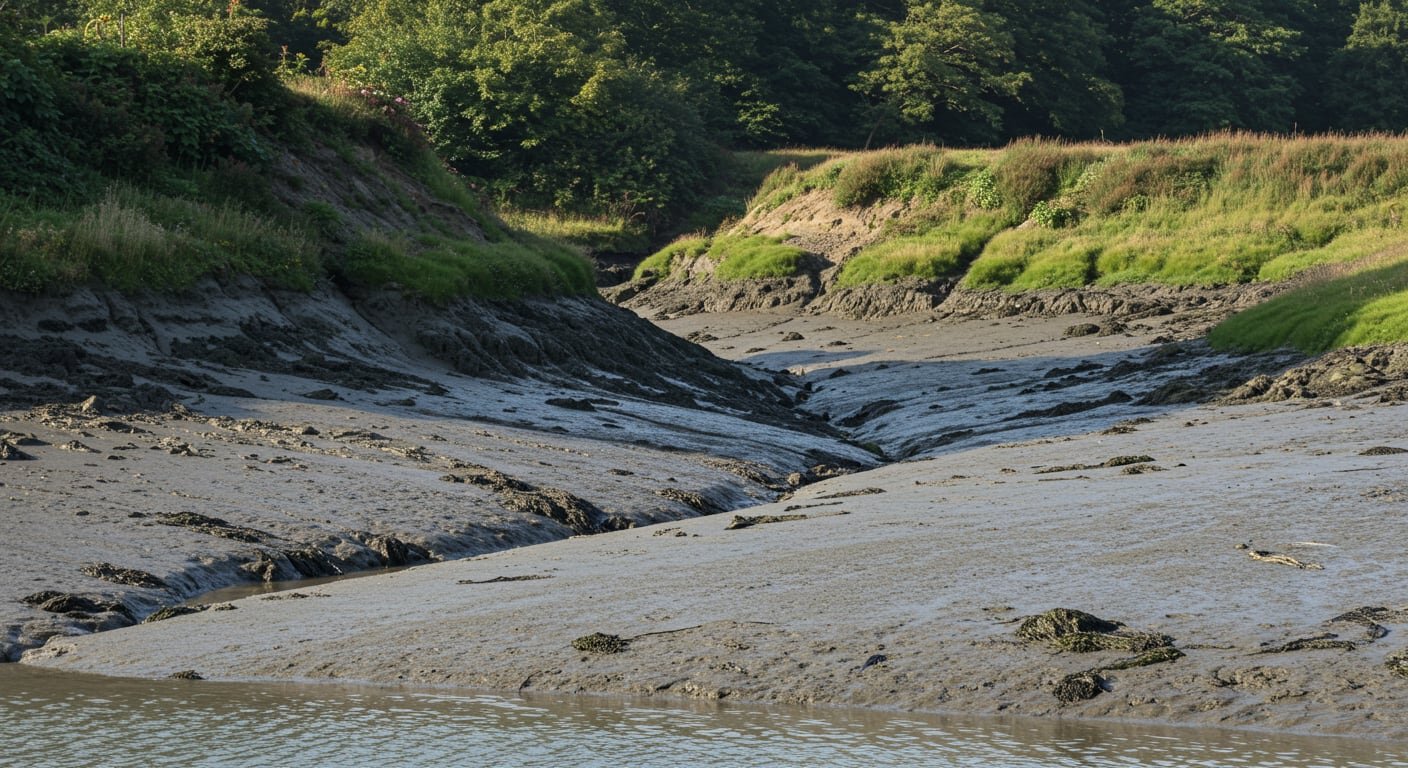
Refugee women fleeing conflict often find themselves walking through terrain that offers no accommodation: marshland that shifts underfoot, estuaries where water rises without warning, coastal paths where the sea determines whether passage is possible or fatal. They walk through landscapes that are beautiful and indifferent both, where nature’s rhythms care nothing for human urgency, where the ground itself becomes obstacle.
When you organise Trials & Tribulations on the Gower Peninsula, you offer sisters this teaching directly. Here, landscape replaces assault course. The earth itself provides the obstacles: marshes that cling and exhaust, tidal flats where water’s presence determines safe passage, beaches where isolation mirrors the loneliness of displacement. This is challenge carried not by human construction but by the land’s own character, by ground that has always been difficult and always will be.
A walk shaped by water
The circular route from Landimore spans eight to ten miles, typically taking three to four hours depending on pace and how often sisters pause to absorb what the landscape teaches. This is not gentle countryside ramble but journey through terrain that demands attention, that requires vigilance, that offers beauty alongside genuine difficulty.
The walk begins in Landimore, a small village on Gower’s north side, easily accessible from Swansea yet feeling remote once you enter the marshes. This accessibility matters for smaller groups — intimate halaqas, families, gatherings of sisters who want the challenge’s teachings without requiring the logistics of larger events. A carload of women can undertake this journey, can learn what the land has to teach about displacement and persistence, about moving through ground that resists and water that threatens.
Through marshland that teaches
From Landimore, the track leads through salt marshes where the ground itself becomes teacher. Here is mud not confined to obstacle course but spread across the landscape, unavoidable, demanding negotiation with every step. The path meanders across tidal flats where water’s presence changes everything — what was passable becomes impassable, what seemed solid proves treacherous, what appeared straightforward reveals hidden complexity.
Refugee women know this uncertainty intimately. They walk through terrain where conditions shift without warning, where what seemed safe becomes dangerous, where the ground beneath their feet cannot be trusted. When your participants move through marshes whilst fasting, their abayas heavy with moisture, their feet uncertain on slippery ground, they learn what words struggle to convey: that displacement means moving through landscape that offers no stability, no certainty, no accommodation for human need.
The marshes host rich birdlife: curlews and redshanks, migratory species passing through on journeys of their own. The sisters walking whilst fasting might recognise kinship with these travellers, these creatures whose survival depends on movement, on finding safe passage through landscapes that shift with seasons and tides. The quiet solitude here allows reflection, allows the body’s struggle to sink deep enough that understanding grows from exhaustion rather than explanation.
To the estuary’s edge
The track brings you eventually to the estuary’s end, where water spreads wide and the hills rise in the distance. Here is vastness that dwarfs human presence, tidal flow that changes the scenery with indifference to human preference. Seals sometimes appear in these waters, birds swoop and dive: life persisting in landscape that offers no gentleness, only the terms on which survival remains possible.
Refugee women often find themselves at water’s edge, staring across distances that must be crossed though crossing seems impossible. The Mediterranean stretches between Syria and safety. The Aegean lies between Turkey and Greece. Rivers separate Myanmar from Bangladesh. Water becomes barrier that must be negotiated, danger that must be faced, hope and terror combined.
Your participants standing at the estuary whilst exhausted and hungry might taste something of this moment: when safety lies across water you cannot yet cross, when landscape offers no easy passage, when the only choice is to continue through difficulty or abandon hope entirely.
Along Whiteford Sands
From the estuary, the route follows the coastline to Whiteford Sands. Here the beach stretches wide or narrow depending on the tide, sometimes sandy and walkable, sometimes rocky and challenging. The vast openness creates isolation — beautiful, peaceful, but also stark reminder of how small human presence is against landscape’s indifference.
The Whiteford Point Lighthouse stands at the estuary’s mouth, situated on small island accessible only at low tide. This lighthouse speaks of maritime history, of guidance offered to those navigating dangerous waters, of light provided for those who might otherwise be lost. Yet it also reminds that guidance comes with conditions: the island can only be reached when water permits, safety depends on timing, on understanding the rhythm of tides that care nothing for human schedules.
Refugee women fleeing across water know that safety often depends on conditions beyond their control. Boats leave or don’t leave based on weather, on payment, on the whims of those who control passage. The sea permits crossing or becomes grave. Timing means everything, yet timing cannot always be chosen.
As sisters walk along Whiteford Sands whilst fasting, the beach stretching ahead and the water beside them, they might understand differently what it means when landscape itself determines whether movement is possible, when nature’s rhythms override human need, when the only option is to work within constraints you cannot change.
The return through changed perspective
The route circles back toward Landimore, offering different views of terrain already crossed. The beach lies on one side, marshes and estuary on the other. The path leads again through salt marshes, but the sisters walking now are not who they were at the journey’s start. The same landscape teaches differently when encountered by changed bodies, by hearts opened through exhaustion and hunger.
This return mirrors what refugee women never experience: the certainty of going home, the knowledge that difficulty is temporary, the mercy of familiar destination awaiting. When your participants complete the circle and arrive back in Landimore, let them hold this privilege alongside what they have learned — that their chosen journey ends whilst forced displacement continues indefinitely, that they return to comfort whilst refugee women remain in transit, uncertain of what tomorrow brings.
What this landscape teaches
The Gower walk offers teachings unavailable in constructed obstacle courses. Here, difficulty is not designed but inherent. The marshes will be muddy not because someone built them that way but because this is their nature. The tide will rise not on schedule designed for participants but according to lunar cycles that predate human presence and will continue long after. The isolation of beach and estuary is not manufactured atmosphere but genuine remoteness, the sense that landscape cares nothing for human comfort.
This authenticity matters. Refugee women do not face obstacles designed to be eventually surmountable. They face terrain that simply is what it is, that offers passage or doesn’t offer passage based on its own character rather than human intention. They navigate conditions that shift unpredictably, that demand constant vigilance, that punish those who misread the signs.
When your participants must check tide times before walking, must navigate muddy sections without guarantee of clean passage, must walk through landscape that is beautiful and difficult both, they learn what constructed courses cannot fully teach: that displacement means moving through world that was not designed for your movement, that offers no accommodation, that simply exists in its own truth whilst you must find ways to survive within it.
Seasons and safety
This walk suits the months between April and October, when weather permits but still offers genuine challenge through heat and exhaustion during summer fasting days. Winter conditions make the marshes too treacherous, the tides too dangerous, the isolation too risky for groups of fasting women.
Safety requires attention. The tides along this coastline rise suddenly, can cut off sections of path, can transform safe passage into danger within the time it takes to walk a mile. Check tide times before setting out. Plan the route to ensure critical sections are crossed when water is low. Understand that tidal waters care nothing for your schedule, will not accommodate your needs, will rise according to their own rhythm regardless of where you happen to be standing.
This safety requirement itself teaches. Refugee women must constantly assess conditions that shift without warning, must plan routes around barriers that appear and disappear, must remain vigilant because landscape and weather and water all conspire to make simple survival complex negotiation. Your participants checking tide tables, planning timing carefully, remaining alert to water’s presence — this is practice in the kind of constant assessment displacement demands.
Footwear matters critically. Sturdy, waterproof boots are not suggestion but necessity. The marshes will be muddy, the tidal flats slippery, the beach sometimes rocky. Abayas will get wet and heavy. Feet will become uncomfortable. This discomfort is part of the teaching — that displacement strips away the comfort of being appropriately dressed, properly equipped, moving through terrain suited to your footwear and clothing.
For smaller gatherings
This route serves particularly well for intimate groups: small halaqas, families, gatherings of six or eight sisters rather than thirty. The logistics are simpler: a car or two from Swansea, easy parking in Landimore, no need for extensive coordination with venues or facilities. Yet the teaching remains profound, perhaps more profound in smaller numbers where conversation can develop naturally, where each sister’s struggle is witnessed and supported, where community is built through shared difficulty rather than organised in advance.
In smaller groups, the isolation of the landscape becomes more present. Eight women walking through marshes feel the remoteness differently than thirty would. The quietness allows deeper reflection, allows the body’s teaching to settle without distraction, allows hunger and exhaustion to speak without being drowned out by group dynamics.
Families undertaking this together create different teaching: children learning alongside mothers, generations sharing difficulty, the challenge becoming inheritance rather than event. Young sisters learn that faith means persistence through landscape that offers no ease. Mothers model that difficulty can be chosen when purpose is clear, that discomfort serves solidarity, that the body can be teacher when the heart is willing.
What you facilitate
When you organise Trials & Tribulations on the Gower Peninsula, understand that you are offering different teaching than constructed courses provide. Here, landscape itself is the challenge. The marshes teach about ground that shifts underfoot. The estuary teaches about water that determines passage. The beach teaches about isolation and persistence. The tides teach about conditions that shift beyond human control, that demand constant vigilance, that care nothing for human preference.
Your participants will walk eight to ten miles through terrain that is genuinely difficult. They will navigate marshes whilst fasting, will face the estuary’s vastness whilst exhausted, will walk along beach where isolation mirrors displacement’s loneliness. They will check tide times and plan around water’s rhythms, will wear boots that become uncomfortable, will feel their abayas grow heavy with moisture and mud.
They will not become refugees. They remain comfortable British women who chose this difficulty and will return to heated homes and clean clothes. But they might emerge changed, with abstract empathy transformed into embodied understanding, with the marsh’s mud and the tide’s indifference and the beach’s isolation teaching what words alone cannot convey.
For those who organise
Gather your halaqa or your family and drive to Landimore knowing you are not planning countryside walk with charitable theme. You are creating conditions where sisters can learn through landscape itself, where the earth provides the obstacles, where difficulty comes not from human construction but from terrain’s own character.
Check tide times before setting out. Ensure everyone wears sturdy waterproof boots. Plan the route to cross critical sections when water is low. This walk will ruin clothing, will muddy what you hoped to keep clean, will strip away the presentations we carefully maintain. Embrace this. The ruining is part of the teaching.
Walk slowly enough that exhaustion builds, that hunger becomes present, that the landscape’s teachings can sink deep. Pause at the estuary’s edge. Stand together on Whiteford Sands. Look at the lighthouse and understand it offers guidance only when conditions permit, that safety depends on timing you cannot fully control, that sometimes the only option is to work within constraints the world imposes.
Return to Landimore changed. Wash the mud away knowing refugee women have no such certainty of cleanliness awaiting. Rest in your homes knowing forced displacement offers no such rest. Hold this privilege alongside what you have learned: that your chosen difficulty ends whilst theirs continues, that you return whilst they remain in transit, that landscape’s indifference taught you something true about what it costs to keep moving when ground and water and exhaustion all argue for stopping.
Why this walk serves the challenge
The Gower Peninsula offers teaching unavailable elsewhere. Here is landscape that has been difficult for millennia, that will remain difficult long after your walk is complete, that offers its challenges not because humans designed them but because this is the land’s nature. The marshes are muddy because water saturates this ground. The tides rise because the moon pulls the sea. The beach is isolated because this coastline sits remote from human settlement.
This authenticity matters. When sisters walk through marshes that shift underfoot, they learn about ground that cannot be trusted. When they plan around tides that rise regardless of human schedule, they learn about conditions that shift beyond control. When they feel isolation on Whiteford Sands, they taste something of displacement’s loneliness, of moving through landscape where human presence feels small and temporary against forces that predate and will outlast them.
Choose this walk for your small group when you want landscape itself to teach, when you want difficulty that comes from the earth’s own character rather than constructed obstacles, when you want the tides and marshes and coastal remoteness to speak truths about displacement that words struggle to convey.
May the marshes teach about ground that offers no stability. May the estuary teach about barriers that must be crossed though crossing seems impossible. May the tides teach about conditions that shift without accommodation for human need. May the beach teach about isolation and persistence, about continuing through landscape that cares nothing for your difficulty, about finding beauty in terrain that demands everything you have.