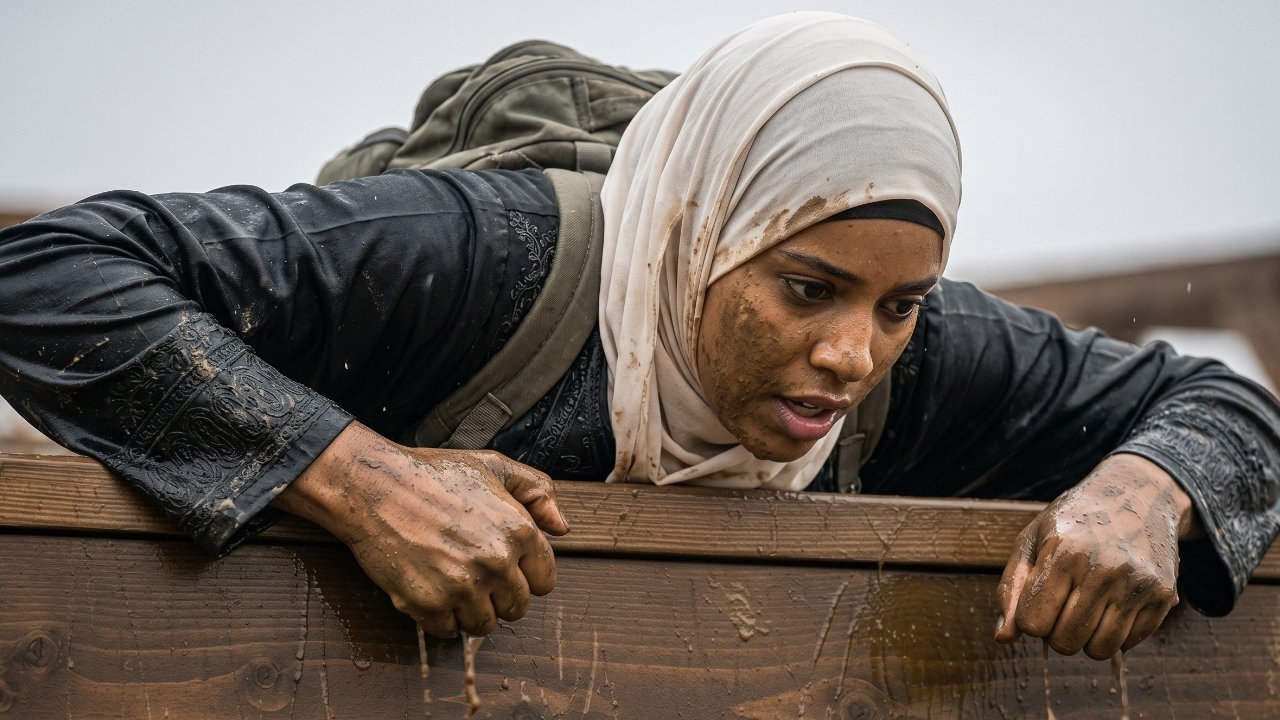
There is a moment, standing alongside sisters before an obstacle, when you feel hesitation settle not just across their features but in your own chest. The cargo net looms higher than it appeared from distance. The water looks colder than anticipated. The mud beneath the crawl space seems deeper, darker, more resistant than comfortable imagination suggested. In that moment before you all begin, doubt ripples through the group — the internal calculation of whether this can be done, whether it should even be attempted, whether turning back might be wiser than pushing forward.
This is where your role as leader becomes most profound. Not in the planning that brought you here, though that matters. Not in standing aside whilst others struggle, observing from comfortable distance. But in stepping forward first, in entering the difficulty alongside those you lead, in demonstrating through your own body what you ask of theirs.
Your role is not to remove the difficulty — the difficulty is the point, the teacher, the very thing that transforms abstract empathy into embodied understanding. Rather, your role is to enter that difficulty first, to show what persistence looks like when your own body protests, to help sisters see through your example that their reluctance and their persistence both honour refugee experiences in ways that easy completion never could.
What you learn together that words cannot teach
Refugee women facing borders do not encounter gentle slopes or graduated difficulty. They face walls topped with wire, rivers swollen with spring melt, terrain that shifts from passable to treacherous without warning. The obstacles are not designed to be overcome — they are designed to prevent passage, to turn people back, to make the journey so difficult that fewer attempt it. Yet refugee women persist. Not because they are exceptionally strong or unusually capable but because the alternatives to attempting the impossible are worse than the attempt itself.
When you approach the cargo net alongside your sisters, all of you fasting, your abayas already heavy with accumulated mud from earlier challenges, you face something that approximates — however inadequately — this reality. The net is not designed for modest dress. The climbing required assumes strength you may not possess. The height demands courage you’re not certain you have. Everything about the obstacle argues against attempting it. Yet you must, and they must watch you attempt it first, see your struggle, witness that you too find this difficult, understand that leadership means entering the difficulty rather than directing others into it from safe distance.
This is why you go first. Not because you are strongest or most capable, but because your willingness to struggle visibly gives permission for others to struggle. When you reach the halfway point and your grip fails, when you must pause to gather strength, when you need help from a sister below to continue — you are teaching what words alone could never convey: that this is genuinely difficult for everyone, that struggle is not shame but honest response to real challenge, that refugee women who scale border fences do so not because climbing comes naturally but because reaching safety requires attempting what seems impossible.
Being present in the difficulty alongside them
There will be sisters who want to quit. Those who reach the water obstacle and say they cannot, will not, refuse to wade through cold that makes the body protest and modest dress cling with uncomfortable weight. There will be moments when complaints rise: this is too hard, too cold, too muddy, too much. In these moments, you will feel the weight of your role acutely. You are already in the water, already feeling the same cold, already experiencing the same discomfort. You cannot diminish what they feel because you feel it too.
This is why your leadership matters differently than supervision from safe distance. You do not reassure from dry ground that the water is not as cold as it appears. You stand in it, shivering alongside them, and acknowledge the truth. “Yes,” you say, water soaking through your own abaya as you speak. “This is difficult. We are cold and tired and uncomfortable. Our bodies are telling us to stop. And refugee women feel all of this but cannot stop, cannot turn back, cannot choose the comfort we could choose if we decided this was too much. Our difficulty is real. Theirs is unending. Our struggle honours theirs not by matching it — which would be impossible — but by choosing to taste even the edge of what they cannot avoid.”
This honesty, offered from within the same struggle, transforms complaint into recognition, resistance into understanding. The sister who wants to quit because it’s too hard sees you also finding it hard, also cold, also wanting comfort. Yet you persist. Not because you are stronger — she can see you shivering, see your discomfort mirroring hers — but because the purpose matters more than the comfort. Your visible struggle gives permission for hers. Your persistence despite difficulty models what you ask of her. You are not sending them through obstacles you avoid. You are walking through together, first into the difficulty and last to leave it.
Reading the obstacles together
Each obstacle carries specific meaning, specific connections to refugee experiences that you help sisters understand through your own engagement with it. The cargo net is not merely climbing challenge — it is border fence, barrier designed to keep people out, height chosen specifically to prevent passage. When you struggle with it whilst carrying your rucksack, whilst maintaining modest dress, whilst exhausted from fasting, you embody what refugee women know: that barriers are designed with bodies in mind, that those who build walls calculate what heights cannot be scaled, that the very construction of obstacles assumes certain capabilities and penalises those who lack them.
As you climb, you might pause halfway and speak to those below: “This net is like the fences at borders, designed to be too high, too difficult. But refugee women climb them anyway, carrying children, carrying everything they own. We climb together, we help each other, because they must do the same.” Your words carry weight because you speak them whilst struggling, because the teaching comes from within shared experience rather than comfortable observation.
The crawl through mud beneath low obstacles is not merely getting dirty. It is moving through spaces designed for concealment, navigating terrain where standing would mean detection, accepting degradation of dignity because survival requires it. You go through first, feeling your best abaya drag through mud, feeling the indignity of crawling whilst others watch, feeling what it means to prioritise persistence over preservation of appearance. When you emerge — muddy, undignified, but through — you show sisters what comes next, what they can endure, what dignity can mean when circumstances strip away its comfortable expressions.
The water crossings are not merely cold and uncomfortable — they are the Mediterranean that drowns thousands annually, the rivers that swell and sweep away those attempting to cross, the floods that turn routes to safety into deadly obstacles. You wade in first, gasping as cold water soaks through your abaya, feeling modest dress become heavy and clinging, your footing uncertain on slippery ground. “This is what refugee women feel,” you say from within the water, shivering. “Except they must cross seas, rivers that might sweep them away, water that might mean hypothermia. We cross together. We help each other. This is how they survive.”
Your interpretation of obstacles matters because you offer it from within shared struggle, because you teach through your body what your words describe, because sisters see that you too find this difficult yet persist anyway. This is not lecture from safety. This is witness from within the difficulty, teaching that carries authority because it is earned through shared experience.
Knowing when strength is spent
There is delicate balance between encouraging persistence and recognising genuine limits. You will reach moments yourself of believing you cannot continue, that the next obstacle exceeds your capability, that completion is impossible. Yet you are leader —s isters watch you, take courage from your example, persist because you persist. This weight is real and must be acknowledged.
Most often, when a sister says “I can’t,” what she means is “this is harder than I expected,” or “I don’t know how to do this,” or “I’m afraid of failing.” You recognise this because you feel it too — the doubt that rises before each obstacle, the question of whether you can actually do this, the temptation to find reasons why stopping would be justified. When you persist through your own doubt, when sisters see you struggle and continue anyway, you give permission for them to do the same.
But sometimes “I can’t” means exactly what it says — exhaustion has genuinely depleted reserves, fear has risen to panic, the body has reached actual limits rather than merely uncomfortable edges. You must learn to recognise this in others whilst managing your own limits, discerning when encouragement serves and when it becomes pressure that dishonours genuine incapacity.
If a sister has truly reached her limit, you do not shame her. You are alongside her in the struggle, not above it. You have felt the same exhaustion, the same doubt, the same body screaming for this to stop. “You have done more than you believed you could,” you might say. “You have tasted what refugee women endure. If you need to stop here, you have already learned what this obstacle can teach you.” Then you help her find safe way to step aside, ensure she is warm and cared for, remind her that attempting was itself courage.
But if she can continue, if this is doubt rather than depletion, you help her find reserves by showing your own. “I know,” you say, already through the obstacle but remembering your own struggle with it. “I felt the same. But we can do this together. Watch me, follow me, I’ll help you.” Your leadership is not command from distance but companionship through difficulty, not direction but demonstration, not supervision but solidarity.
Building community through shared struggle
You learn quickly that obstacles are overcome not through individual excellence but through mutual support. As leader, you set this pattern. You summit the cargo net first, then immediately reach back to help the sister still climbing. You complete the water crossing, then turn around and wade back in to encourage those still hesitating at the edge. You emerge from the mud crawl, then crouch beside it to offer your hand to sisters still beneath the wire.
This is leadership through service. You do not finish and rest whilst others struggle. You finish and return to help, again and again, until the last sister completes the obstacle. Your own exhaustion accumulates — you cross each obstacle multiple times, helping different sisters through, feeling the difficulty compound as fatigue deepens. But this repeated engagement teaches what comfortable supervision never could: that refugee women survive through mutual support, that displacement creates communities bound by shared struggle, that no one makes it alone.
When sisters see you — their leader — spending yourself to help them succeed, when they watch you wade back into cold water you already crossed to encourage someone hesitating, when they see you covered in more mud than anyone because you’ve been through the crawl space multiple times helping different people, they learn what solidarity actually costs. Not comfortable encouragement from dry ground. Not supervision from safe distance. But being present in the difficulty, returning to it again and again, spending your strength so others might find theirs.
And they learn to do the same. The sister who completes an obstacle with your help turns and helps the next one. The sister who was terrified of the cargo net but made it over with your encouragement becomes the one calling up to others from the top. The collective effort builds organically because you model it first, because your leadership demonstrates that strength is for service, that capability is for helping, that finishing first means staying to ensure everyone finishes eventually.
When the last sister completes the final obstacle, when the slowest and most reluctant crosses the finish line helped by you and by those who finished earlier and stayed, you witness something sacred: community forged through difficulty, sisterhood deepened through shared struggle, collective achievement that matters more than any individual triumph. You are exhausted beyond measure — you’ve been through every obstacle multiple times, helped countless sisters through, spent yourself completely. But this exhaustion is itself teaching: that leadership in crisis is not about being strongest but about spending strength for others, that refugee communities survive because the capable help the struggling, that everyone reaches safety together or the reaching means less.
The transformation you embody
By the time you and your sisters complete the assault course, all of you are changed. Not dramatically perhaps; no single experience rewrites a life. But genuinely. You look down at your best abaya, the one you wore as statement of dignity and commitment, now ruined with mud beyond salvaging. Every sister wears the same stains. This teaches something no lecture could convey: that sometimes what you hoped to preserve gets destroyed in the attempt to reach safety, that dignity takes different forms when circumstances strip away its comfortable expressions.
The exhaustion you feel is deeper than theirs. You have been through every obstacle multiple times, helping different sisters through each one. Your muscles ache with accumulated effort. Your lungs still remember the shock of cold water crossed and re-crossed. Your hands know intimately the feeling of clinging to cargo net whilst strength threatened to fail — not once but many times, going back to help others after you yourself barely made it over.
This depth of exhaustion teaches you what leadership costs. Not comfortable direction from safe distance. Not supervision while others struggle. But entering the difficulty first and leaving it last, spending yourself completely so others might succeed, persisting through your own limits to help others approach theirs. You have learned in your body what refugee community leaders know: that those who guide others through crisis must face the crisis fully themselves, must spend strength for others even when reserves feel depleted, must return again and again to difficulty already endured because someone still needs help through it.
And you carry forward not just memory but embodied knowledge that will shape how you lead in future. You know now what it feels like to persist when your own body argues for stopping. You understand the difference between perceived limits and actual depletion. You recognize the particular exhaustion of helping others through difficulty you’ve already faced, the compound fatigue of encountering obstacles repeatedly. This knowing settles differently than intellectual understanding, stays longer than facts forgotten, shapes how you lead through future challenges in ways that comfortable distance could never teach.
For sisters who lead through shared struggle
Your work is among the hardest: you bear all the difficulty participants face plus the additional weight of going first, of returning to help, of modeling persistence when your own reserves feel exhausted. You cannot show weakness when sisters need your strength. You cannot stop when someone still needs help through an obstacle. You cannot rest whilst others struggle. The role demands everything.
Yet this is why your leadership matters. Not because you are strongest — the strongest leader might complete obstacles easily and teach nothing about persistence through genuine difficulty. But because you struggle visibly and persist anyway, because sisters see you find it hard yet continue, because your exhaustion is real and your determination in face of it becomes their permission to draw on reserves they didn’t know they possessed.
When you wade into cold water for the third time to help another sister across, when you climb the cargo net again though your arms shake with fatigue, when you return to the mud crawl you’ve already completed multiple times because someone is stuck and frightened — you are not merely facilitating obstacle completion. You are embodying what refugee communities know: that survival depends on those with remaining strength spending it for others, that leadership in crisis is service not command, that everyone reaches safety together or the reaching means less.
The exhaustion you feel at the day’s end is earned through sacred work. You have not supervised from distance. You have walked alongside, gone first, returned to help, spent yourself completely. The mud covers you more thoroughly than anyone because you’ve been through everything multiple times. Your fatigue runs deeper because you’ve carried not just your own difficulty but helped others carry theirs.
The gift you give through your own struggle
When sisters emerge from the assault course — muddy, exhausted, somehow lighter despite fatigue — they carry with them the gift of your example: that difficulty can be faced, that limits can be exceeded, that leadership means entering the struggle rather than directing it from safety, that community survives through mutual support modeled first by those who guide.
This gift required more than planning or supervision. It required you spending yourself — your strength, your comfort, your reserves — so that sisters who doubted they could complete obstacles discovered they could when you went first and showed the way, when you returned and helped them through, when you persisted alongside them when both of you wanted to stop.
Not everyone can lead this way. It requires particular courage — not the courage that finds difficulty easy, but the courage to struggle visibly, to be seen at your limits, to keep going anyway because others need your example. It requires generosity to spend yourself helping others when you are exhausted. It requires humility to admit difficulty whilst demonstrating that difficulty need not mean defeat.
If you have these qualities, if you can lead from within shared struggle rather than from supervisory distance, then you offer something rare: the conditions where comfortable British Muslims can glimpse, through shared difficulty with you, what displaced women endure not by choice but by necessity that permits no alternative. Your visible struggle teaches more than any lecture about refugee experiences. Your persistence despite exhaustion demonstrates more than any explanation about resilience. Your returning again and again to help others shows more than any description about community survival.
May your leadership be faithful. May your strength be sufficient for those who need your help. May the obstacles teach you even as you help them teach others. May you finish knowing you have given everything — not held back strength for personal comfort, not supervised from safety whilst others struggled, but entered fully into shared difficulty and helped every sister through.
This is leadership through solidarity. This is guidance through shared struggle. This is what it means to lead sisters through obstacles designed not to entertain but to teach, not to achieve but to transform, not to complete but to understand. May you do it with courage and generosity and the deep conviction that your own exhaustion in service of others’ understanding is sacred work, that struggle undertaken first so others might follow is its own form of devotion, that spending yourself completely to help sisters discover what they are capable of is among the most important work that can be done.
You will be covered in more mud than anyone. You will be more exhausted than anyone. You will ache in places you didn’t know could ache. And this will be exactly right — the visible sign that you led not from distance but from within, that you went first and came last, that you spent yourself completely so that every sister might make it through. This is the cost of leadership through shared struggle. This is also its sacred gift.