Every Saturday morning, or every evening after school, they arrive at your madrasah. Some eager, some reluctant, some dropped off by parents who trust you with their daughters’ Islamic education. You teach them tajweed and tafsir, the stories of the Prophets and the pillars of faith. You help them memorise Qur’an, guide them through the meaning behind the words, answer their questions about how to live Islam in a world that often doesn’t understand it.
But you know something else too: that faith learned only in classrooms remains theoretical until it meets difficulty. That resilience discussed in lessons about Prophetic perseverance stays abstract until bodies discover what endurance actually costs. That the ummah solidarity you teach becomes real only when students choose to embody it, to let empathy move from feeling into action.
What if your madrasah could offer that next step? What if the girls who learn about sabr on weekday evenings could test it on a Saturday morning, discovering what patience means when their bodies want to quit? What if the students who study the Hijrah could glimpse — however briefly — the reality of displacement that drove the Prophet ﷺ and the Companions from Makkah to Madinah?

Your educational mission, extended
Trials & Tribulations isn’t entertainment dressed up as Islamic activity. It’s pedagogy — experiential education that transforms abstract lessons into embodied understanding. When your students undertake this challenge whilst fasting, dressed in modest clothing that wasn’t designed for assault courses, attempting obstacles that seem beyond their capability, they’re not playing at difficulty. They’re choosing temporary displacement to understand permanent exile, selecting discomfort to build empathy with refugees who carry no such choice.
This aligns perfectly with what you’re already doing. Your madrasah exists to educate hearts and minds, to build Muslim identity, to prepare girls for lives of faith in complicated circumstances. The challenge extends that mission beyond your classroom walls into muddy ground where different lessons wait — lessons about capability and limitation, about choosing difficulty for something beyond yourself, about what solidarity actually costs when it moves from theory into practice.
Consider how the challenge reinforces what you already teach:
Sabr stops being vocabulary
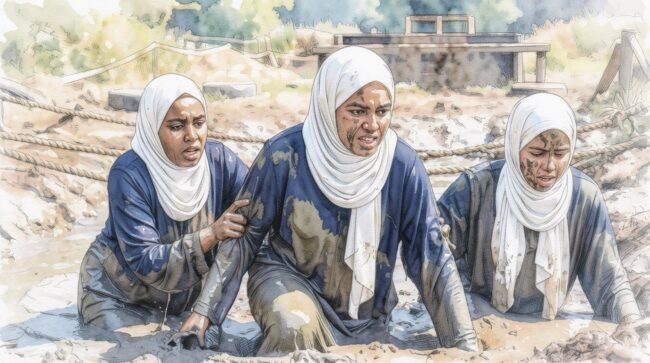
In class, you explain patience as bearing hardship with trust in Allah. On the course, your students discover sabr in their trembling muscles, in the voice saying “I can’t” whilst they keep moving anyway, in choosing to persist when stopping would be easier. They learn patience not by defining it but by embodying it.
Sisterhood becomes visible
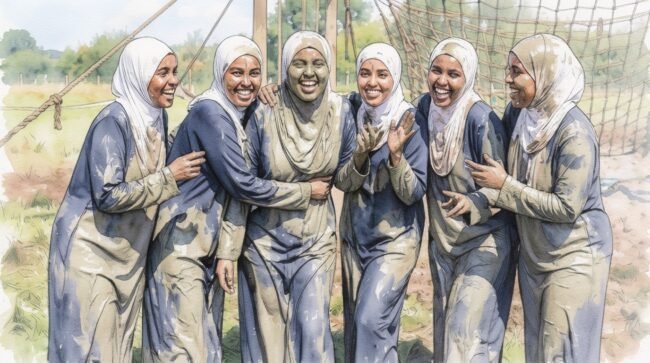
You teach that Muslims form one ummah, that believers support each other like a building’s bricks. During the challenge, this metaphor materialises: students helping each other over walls, encouraging the one who’s struggling, refusing to finish until everyone crosses together. They experience what you’ve been explaining, discover that solidarity costs effort and attention and the willingness to slow your own pace for someone else’s need.
The Hijrah gains dimension
When you teach about the migration to Madinah, you emphasise the sacrifice involved, the trust required, the difficulty of leaving home for uncertain refuge. Your students nod and take notes. But when they’ve walked for hours whilst fasting, when they’ve navigated unfamiliar terrain in clothing that complicates movement, when they’ve felt the vulnerability of being far from comfort and safety, the Hijrah stories resonate differently. They’ve tasted a fragment of what displacement means.
Refugees shift from abstract to particular
You discuss the ummah’s responsibility to those displaced by violence and persecution. You mention Syria, Palestine, Yemen, Rohingya, the statistics that numb rather than move. But after your students choose temporary difficulty to understand permanent displacement, after they’ve embodied empathy rather than merely felt it, refugees stop being distant problems. They become people whose experience your students have touched, however briefly, whose humanity they’ve honoured through embodied solidarity.
The teacher who leads
This challenge needs someone from your madrasah staff to lead it — not because you’re fittest or most outdoorsy, but because you already carry authority with these students, already understand their capabilities and vulnerabilities, already know which girl needs encouragement and which needs permission to stop trying so hard.
Perhaps you’re reading this and recognising yourself. You’re the teacher who coordinates the annual iftar, who organises the Eid celebration, who somehow ended up responsible for activities beyond regular classes because you said yes when others stayed silent. Or perhaps you’re the quieter one who rarely volunteers for extra duties but senses that this matters enough to step forward.
Leading doesn’t mean doing everything. Your madrasah management handles logistics like booking venues, arranging transport, communicating with parents. You provide spiritual and educational framing, help students understand why this challenge serves their growth, guide them through the experience itself. You’re not a fitness instructor but a teacher extending your classroom into unfamiliar terrain.
Some of your colleagues might question whether this fits your madrasah’s mission. Whether physical challenge belongs alongside Qur’an memorisation and Islamic studies. Whether the risk — of injury, of students struggling, of the challenge proving too difficult — justifies the effort. These are legitimate questions deserving honest answers.
The answer lies in recognising that your students need more than information about Islam. They need experiences that transform abstract knowledge into lived understanding. They require opportunities to test faith under difficulty, to discover what their bodies and souls can endure, to move beyond comfortable piety into chosen discomfort that serves something beyond themselves. This challenge provides exactly that: not as replacement for your regular teaching but as its natural extension into embodied practice.
Your students as you’ve not seen them
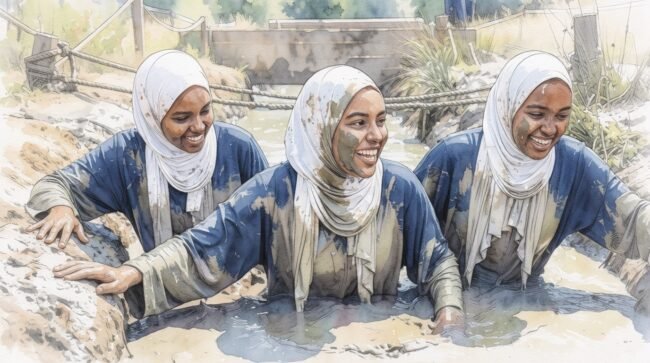
The girl who rarely speaks during class, who sits quietly whilst others dominate discussion: watch her on the course. She might surprise you, revealing determination that classroom settings never called forth. The confident one who always knows the answers might struggle when knowledge alone can’t overcome physical obstacles. The student you worried about most could demonstrate unexpected resilience.
Difficulty strips away the roles students settle into, reveals capacities that routine obscures. You’ll see your madrasah girls differently because the challenge demands different things than memorisation or discussion. Some will discover strength they didn’t know they possessed. Others will learn that it’s acceptable to struggle, that faith doesn’t require pretending capability you don’t have, that asking for help demonstrates wisdom rather than weakness.
And they’ll see each other differently too. The athletic girl and the bookish one, the popular student and the isolated one — when they’re all muddy and exhausted and choosing to persist despite difficulty, previous hierarchies matter less. Shared struggle builds bonds that social dynamics alone rarely create. Your madrasah community deepens because students have witnessed each other in vulnerability and determination, have helped each other through something genuinely difficult.
The practical considerations
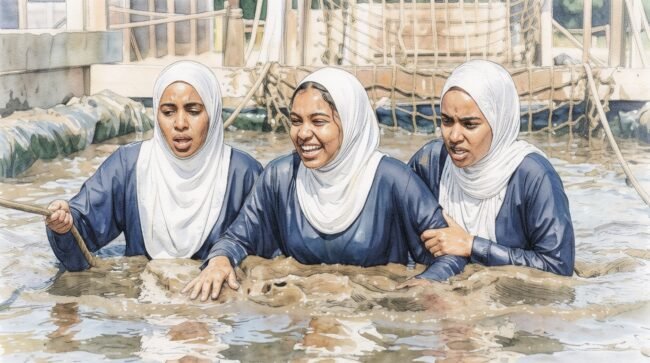
Your madrasah management will rightly ask about logistics. How many students can participate? What ages work best? How do you ensure safety whilst maintaining the challenge’s difficulty? What do you tell parents who worry their daughters aren’t fit enough or might get hurt?
Start with a manageable group — perhaps fifteen to twenty-five students, enough to create community without overwhelming your organisational capacity. Target ages where girls can understand the challenge’s purpose beyond mere activity — typically twelve and older, though younger students can participate if they grasp the embodied empathy dimension.
Safety matters profoundly, but don’t let concern about risk paralyse you into inaction. Choose reputable venues with proper safety standards. Brief students thoroughly about what to expect. Make clear that attempting obstacles matters more than completing them, that there’s no shame in walking around something that proves too difficult. Bring first aid supplies and adults who can respond to injury. Accept that some risk exists — it’s part of what makes the challenge meaningful — whilst taking reasonable precautions to minimise harm.
Tell parents honestly what you’re planning and why. Explain that this isn’t a fun day out but experiential education serving your madrasah’s larger mission. Describe how the challenge reinforces lessons their daughters learn in class — sabr, sisterhood, embodied empathy with refugees. Address fitness concerns directly: students need not be athletes; they need only willingness to attempt difficulty whilst supported by teachers and peers. Some will struggle more than others; this teaches its own valuable lessons about different capacities and the importance of supporting each other.
Some parents will enthusiastically support this. Others will worry or refuse permission. Respect both responses. The challenge serves those who participate; it’s not mandatory for everyone. Perhaps start with a smaller pilot group, then expand as parents see the impact on daughters who undertook it.
Integration with your teaching
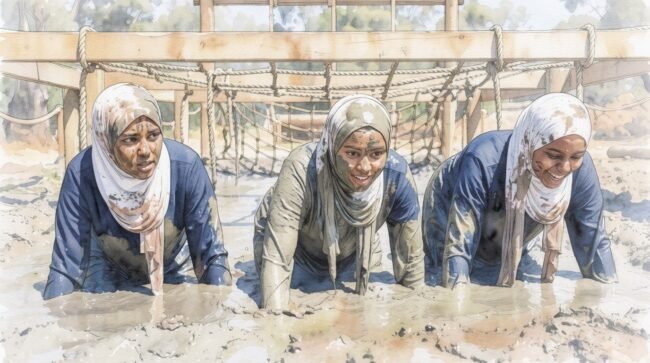
The weeks before your challenge can deepen rather than disrupt your regular madrasah schedule. Your usual lessons gain new urgency when students know difficulty awaits. When you teach about the Prophet’s ﷺ journeys through hardship, students lean forward with different attention. They’re about to face their own small difficulty, and his example becomes immediately relevant rather than merely historical.
Consider devoting some class time to preparation — not just physical training but spiritual framing. Read “Spiritual refugees” together and discuss it. Study verses about hijrah, about choosing difficulty for Allah’s sake, about the ummah’s responsibility to displaced people. Let students voice their excitement and anxiety, their questions and doubts. This preparation isn’t separate from your educational mission; it’s that mission made concrete in anticipation of embodied experience.
Perhaps gather the morning of the challenge, or the evening before if you’re attempting it whilst fasting, for brief spiritual preparation. Pray together as you always do, but now prayer carries the weight of impending difficulty. Make dua for strength, protection, sincerity of intention, acceptance of whatever Allah wills. This isn’t a new practice but your familiar madrasah rhythms pointed toward unfamiliar challenge.
What it builds in your community
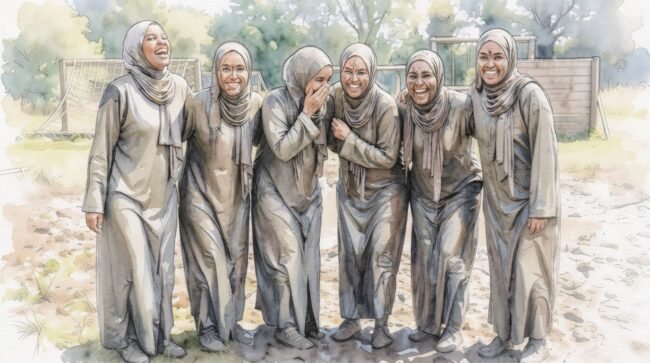
A madrasah that undertakes Trials & Tribulations together gains something beyond the individual transformation of participating students. Your community acquires shared story — “remember when we did the challenge, when Sara almost gave up but kept going, when we all finished together despite the rain?” This shared memory binds students to each other and to your madrasah in ways that regular classes alone rarely achieve.
Parents see their daughters differently — capable of more than assumed, willing to choose difficulty for meaningful purpose, part of a community that supports each other through genuine challenge. Some parents who previously viewed madrasah as obligation might recognise it as place where their daughters grow in substantive ways, where faith becomes embodied practice rather than mere information.
Your teaching gains new reference points. When you discuss resilience, you can mention the challenge — how students demonstrated sabr on the course, what they discovered about persistence. When you study refugee experiences, you can connect it to what students tasted themselves. The challenge becomes part of your madrasah’s living tradition, woven into how you teach and how students understand themselves.
And the following year, when new students hear about it from those who participated, anticipation builds. The challenge shifts from novel event to expected tradition, from something unusual to something your madrasah does. This repetition deepens impact: returning students discover new lessons the second time, newer students benefit from the wisdom of those who’ve gone before, your understanding of how to run it well improves through experience.
The call to educational leadership
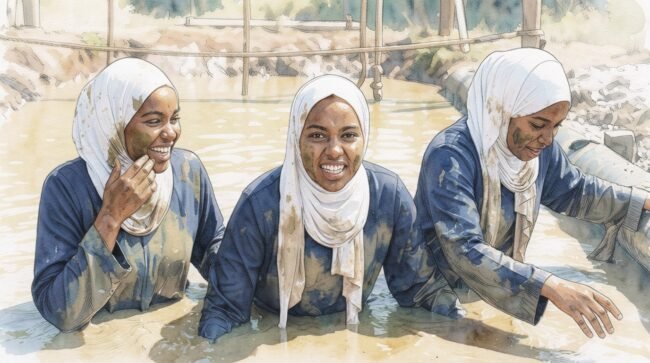
If you’re in madrasah management reading this, consider whether your institution could offer this experience. Not because every educational program needs physical challenge, but because your students deserve opportunities to test faith under difficulty, to move beyond comfortable piety into chosen discomfort that serves refugee solidarity.
If you’re a teacher sensing this could serve your students, raise it with your management. Offer to lead it. Explain how it extends your existing mission rather than distracting from it. Acknowledge the legitimate concerns about logistics and risk whilst pointing to the substantial educational and spiritual benefits. Be prepared for resistance — some will question whether this fits what madrasahs should do — but hold firm in your conviction that experiential education serves faith development in ways classroom teaching alone cannot.
Look at the guidance on our site. Choose a venue appropriate for your students’ ages and fitness levels. Pick a date that works within your madrasah calendar. Plan thoroughly but don’t let pursuit of perfection prevent you from attempting something meaningful. Your first challenge won’t be flawless; accept this and proceed anyway. You’ll learn by doing, refine through experience, improve each time you run it.
You already educate hearts and minds, already guide students toward deeper understanding of faith and its demands. This challenge simply extends that work into muddy ground where different lessons wait — lessons your students need, that your teaching prepares them for, that your madrasah exists to provide.
The refugees your students walk for carry no choice about their displacement, face difficulty far beyond a few hours on an assault course, endure uncertainty you cannot adequately represent through temporary challenge. But you can offer your students the gift of embodied empathy, of choosing discomfort to understand exile, of transforming abstract solidarity into something remembered in their bodies. This is education worthy of your madrasah’s mission, worthy of your students’ capability, worthy of the trust parents place in you to form their daughters in faith.