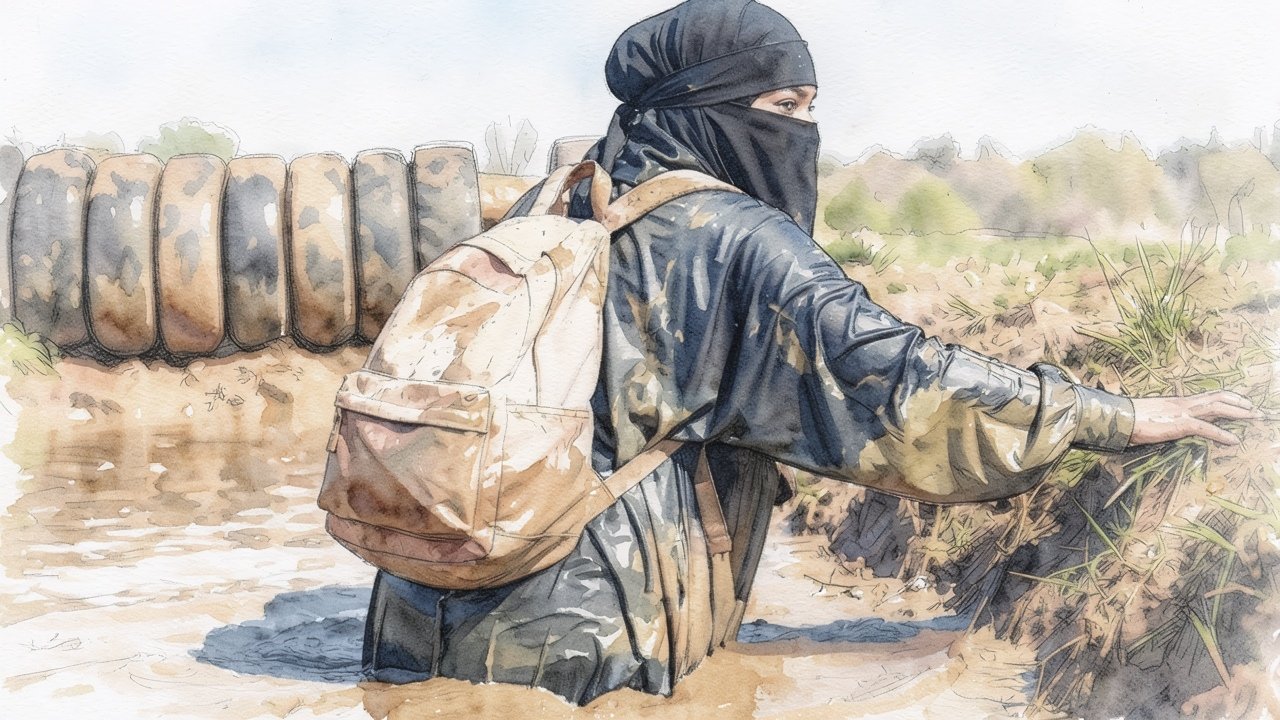
The question arrives sometimes, hesitant but genuine: If this is a ladies-only event with female supervisors, do they really need to wear niqab? And technically, of course, the answer is no. The same could be said of modest dress generally — in a space where only sisters gather, some requirements relax.
But here is what you must understand as organisers: for niqabi women, this challenge offers something rare and profound. The opportunity to test themselves at their absolute limits whilst remaining fully who they are, to discover what their bodies can endure without compromising what their souls require. For them, the niqab is not negotiable. Nor should you wish it to be.
Your role is not to question this choice but to support it, to understand what it means, and to help these remarkable women navigate a challenge that will push them further than perhaps any other experience in their lives.
What the veil represents
For niqabi women, the face veil is not mere fabric or cultural artifact. It is outward expression of inner devotion, visible commitment to values that shape every choice, every interaction, every moment of their days. It represents modesty, yes, but also self-discipline, spiritual focus, a profound connection to Allah that they will not surrender even — especially —when circumstances grow difficult.
When they choose to wear niqab through your challenge, through mud and exhaustion and obstacles that would be easier to navigate without it, they are making a statement that resonates far beyond the physical course. They are saying: my faith is not conditional on comfort. My identity is not negotiable based on difficulty. Who I am at my easiest is who I will be at my hardest.
The Qur’an promises that “Allah does not burden a soul beyond that it can bear” (Surah Al-Baqarah, 2:286). This verse will sustain them through moments when the niqab grows heavy with water, when it clings uncomfortably, when every breath requires conscious effort. Your task is to honour the courage this represents, to recognise that they are choosing a harder path in service of something you may not fully comprehend but must absolutely respect.
The authentic solidarity
Some might wonder whether wearing niqab adds unnecessary difficulty to an already demanding event. But consider what you are asking participants to understand: the refugee experience, the displacement, the requirement to maintain dignity whilst circumstances strip away every comfort.
Refugees rarely have luxury of choosing their circumstances or their attire when fleeing violence. They carry what they can and wear what they must, and if that includes full modest dress through impossible terrain, then so be it.
Your niqabi participants forge deeper connection to this reality than perhaps any others in your challenge. They are not approximating what refugee women endure — they are embodying one crucial dimension of it. The choice to accept this additional challenge, to willingly embrace greater difficulty in service of greater authenticity, deserves your recognition and support.
Yes, the fabric will grow impossibly heavy when soaked. Yes, the veil will dampen and require constant adjustment to maintain breathability. Yes, movement will be more restricted than in any other configuration of modest dress. But each step becomes reminder of resilience Allah has bestowed, each obstacle conquered stands as testament to the strength found where faith and purpose meet.
The transformation you witness
As organisers, you will watch something remarkable unfold. These women, faces covered throughout the challenge, will discover empowerment in the midst of what seems like constraint. Their jilbabs, caked in mud and drenched with water, will feel like tangible weight upon their shoulders.
The niqab, damp against their skin, will demand careful management. Yet amidst these challenges, they will experience something overwhelming: the knowledge that their faith and identity do not hinder them but propel them forward.
You will see it in how they move — the determination in every step, the refusal to compromise even when compromise would be easier. You will hear it in the encouragement they offer each other, sisters recognising the extra difficulty their niqabi companions face and meeting it with admiration and support. The challenge transforms from individual endurance into collective witness: we see your courage, we honour your choice, we walk beside you.
This is what you make possible when you create space for niqabi women to participate fully as themselves. Not asking them to adjust, nor suggesting they might find it easier without the veil, but holding space for the harder choice and recognising its profound meaning.
The guidance they require
Your responsibility extends beyond simply allowing niqabi participation to actively supporting it. These women need specific guidance to navigate your challenge safely and successfully.
Help them understand the importance of material choice. The jilbab and niqab should be crafted from quick-drying, breathable fabric — lightweight materials that will not become impossibly burdensome when wet. Polyester blends work far better than heavy cotton.
A two-piece jilbab offers particular advantages: lightweight, practical, providing excellent coverage without unnecessary bulk. But ultimately the choice is theirs, so long as the garment is loose-fitting, provides proper coverage, and is dark enough not to become transparent when wet.
Guide them toward appropriate layering. Beneath the outer jilbab should be comfortable running leggings and supportive sports bra — activewear that allows freedom of movement whilst maintaining modesty. Over this, loose black trousers and a long-sleeved running top provide additional coverage and breathability. Each layer must serve practical purpose without adding weight that will hinder rather than help.
Encourage them strongly to practice beforehand. Running, climbing, moving through obstacles in full modest dress including niqab — this requires adaptation to unique sensations and requirements. The more familiar they become with how their body moves in these conditions, the more confidently they will navigate your actual course.
What you must never do
Never suggest, even subtly, that the niqab is impractical for this challenge. Never imply that they would find it easier without it. Never frame their choice as making things harder than necessary. For niqabi women, this is not about making things harder — it is about staying true to who they are whilst testing what they can achieve.
Never question whether they are certain about their choice. They are certain. The question itself suggests you do not understand what the niqab represents to them. Trust their knowledge of themselves, their faith, their limits. Your role is support, not skepticism.
Never fail to recognise the additional courage their participation requires. When niqabi women complete your course, they have accomplished something that demands acknowledgment. Not pity or surprise, but genuine recognition that they have pushed themselves to edges that others might never approach.
The beauty of what they offer
Niqabi participants do more than complete your challenge — they expand what everyone present understands to be possible. They demonstrate that modesty and strength are not opposites but natural companions, that faith does not limit capability but often enlarges it, that the women behind veils possess determination and resilience that stereotypes would deny.
After your challenge, as they clean mud from every surface, as they laugh together while washing it off, as they share the collective relief and triumph of completion — the niqab remains. Through exhaustion and exhilaration, through difficulty and accomplishment, their identity stayed intact. This is not small thing. This is profound testimony to the harmony between who they are and what they can do.
Their muddied jilbabs will likely be destined for future adventures rather than their next celebration. But these garments now carry stories worth more than pristine fabric — stories of courage, of faith tested and proven, of solidarity practiced at significant personal cost.
The invitation you extend
As organisers, you have opportunity to create space where niqabi women can fully participate in your challenge, supported and celebrated for the remarkable choice they are making. This requires understanding that you cannot fully understand, respecting what you may not share, and recognising courage in forms that differ from your own experience.
When niqabi women cross your finish line — face still covered, jilbab drenched with mud, exhaustion and triumph mingling in their voices — they embody something essential to your challenge’s purpose. They demonstrate solidarity with refugee women who maintain dignity through unimaginable hardship. They prove that faith and physical challenge are not contradictions but complements. They inspire every woman who witnesses their completion to reconsider what she herself might be capable of.
The Qur’an promises: “Verily, with hardship comes ease” (Qur’an 94:6). Your niqabi participants will discover this truth written in their own experience, proved in their own bodies. Your role is to hold space for that discovery, to support their journey without questioning their choices, to recognise that the harder path they have chosen serves purposes both practical and profound.
The standard you uphold
Never pressure niqabi women to participate — this choice must come entirely from within. But when they choose to join your challenge, when they arrive fully covered and ready to face what you have built, meet them with support that matches their courage. Provide the practical guidance they need. Honour the faith that sustains them. Celebrate the completion they achieve.
They do not have to wear niqab through your challenge — this is true from both fiqh and practical perspectives. But for those who choose to do so, who select the bold path over the easier one, who refuse to compromise identity even when circumstances might justify it — these women deserve your deepest respect and most practical support.
This is their choice to make. Your role is to make it possible, to make it safe, and to recognise it for what it truly is: an act of faith meeting the furthest edge of physical challenge, proving that the two can not only coexist but elevate each other into something remarkable.
May you have the wisdom to understand what you witness. May you have the sensitivity to support without questioning. May you create space where niqabi women discover strengths they did not know they possessed, where faith is tested and emerges stronger, where the covered face reveals — to those who have eyes to see — courage beyond what most will ever be asked to demonstrate.
When they embrace your challenge with full trust in Allah, the spiritual and personal rewards prove immeasurable. And when you support them well, the gratitude they carry will match the mud on their jilbabs — evidence of something difficult done, something meaningful achieved, something sacred honored even in the midst of earth and exhaustion.