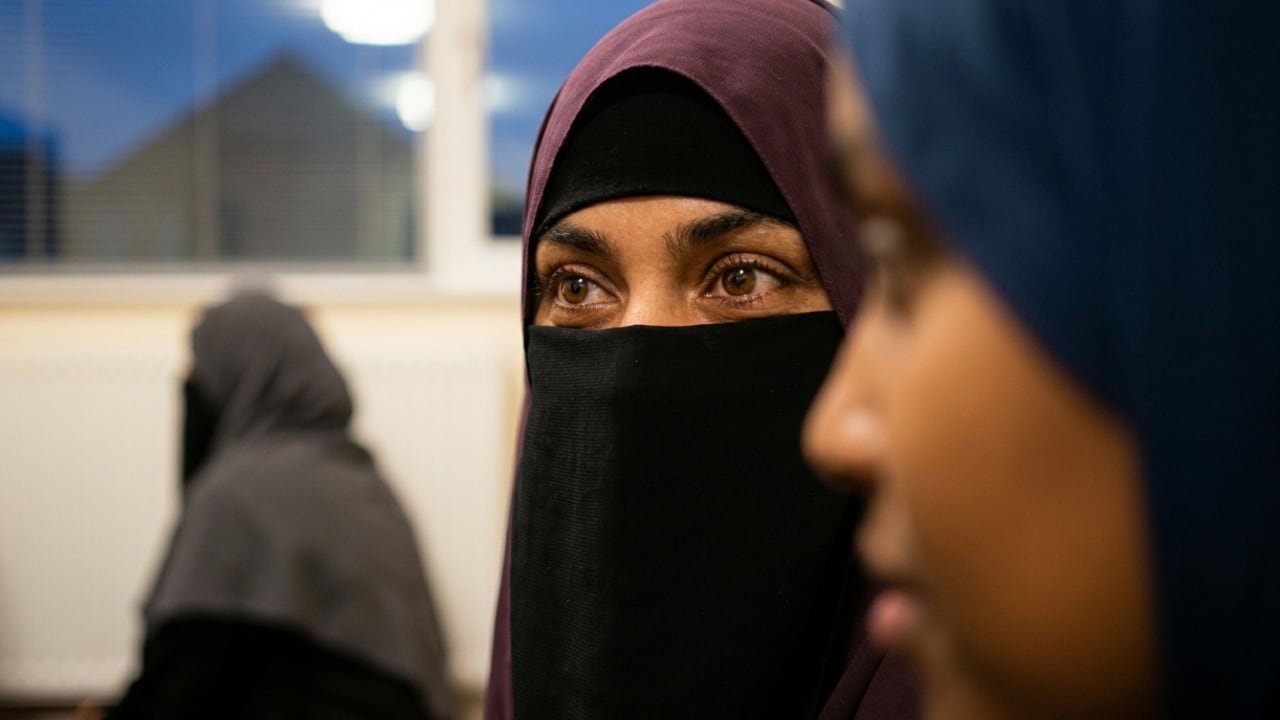
The morning preparations for Trials & Tribulations often begin in silence: sisters arriving in the half-light, adjusting hijabs against the wind, lacing boots that will soon be caked with mud. Yet in the days before they gather, voices rise in concern, to question or object.
These voices matter. They deserve to be heard, to be met not with defensiveness but with the same patient understanding you would offer any soul genuinely seeking to comprehend something unfamiliar.
As an organiser, you will encounter these questions. Some arrive wrapped in care, others in confusion or suspicion. Your task is not to silence them but to illuminate what this challenge truly offers. That is, to open a door for understanding rather than building walls against critique.
Brothers who feel protective
There are brothers who watch this challenge unfold and feel uncertain, or even troubled. Their concern often stems from a place of wanting to guard what they believe is sacred, to preserve what they understand as proper bounds. This impulse deserves respect even when their conclusions may need gentle correction.
So let them know: Trials & Tribulations is no more an innovation in worship than their morning commute or trip to the supermarket. What unfolds from Friday evening through Saturday morning rests on the firmest foundations: sisters gathering for reflection, sharing meals, standing together for Isha, Tahajjud, Fajr, rising in the depths of night for suhoor and making intention to fast. All established acts, worthy and honourable.
The sisters who undertake this journey do so in pursuit of good: to stand in solidarity with the vulnerable, to raise funds for those in desperate need, to strengthen bonds of faith and friendship. This is their path to walk, their transformation to experience, their achievement to claim. What is asked of the brothers is not permission or oversight but something harder and more generous: trust. Trust that these women know their faith, understand their responsibilities, and have chosen this challenge for reasons both sound and sincere.
The greatest support you can offer is to step back, to create space rather than constraint, to honour their autonomy as believers accountable to Allah alone.
Sisters who harbour doubts
You may encounter sisters whose hearts do not warm to this challenge, who wonder at its necessity or question its appropriateness. This is natural and as it should be; not every form of service calls to every heart, nor does every act of devotion resonate with every soul. Their questions can sharpen your understanding, while their concerns can strengthen your approach. Welcome them.
But help them see what this challenge truly is before they judge what it is not.
To sisters who wonder about modesty: know that women in full jilbab, faces covered in niqab, have completed this challenge and emerged radiant with accomplishment. Modesty is not fragility. Faith does not require us to avoid the natural world Allah created for all His servants. The same Islam that calls us to guard our modesty also celebrates Nusaybah’s courage at Uhud, Khadijah’s business acumen, and Aisha’s scholarship. Our tradition has never taught that piety requires passivity or that virtue demands we make ourselves small.
To sisters who see this as excessive or performative: consider that when refugee women flee their homes, they flee in abayas and hijabs. When they walk through dust and mud seeking safety in a world that would rather not see them, they walk in modest dress. The choice to complete this challenge whilst visibly Muslim is not theatre. It is an embodied act of solidarity that says: we see you, remember you, and walk with you in the only way distance and circumstance allow.
If the purpose still eludes you, perhaps sit with the question longer. Sometimes understanding arrives not through argument but through patient reflection, through choosing to see with generous eyes rather than suspicion.
Those outside our faith
In the communities you share, there will be neighbours who observe Muslim women in abayas navigating British countryside and feel puzzled, or even wary. This wariness often speaks more of what they do not know than what they do. Of a void where understanding should dwell, filled instead with narratives drawn from sensational headlines rather than lived experience.
Help them see: this is charity work. This is physical challenge undertaken for good. This is community building of the sort that happens in every town and village across this land: sponsored walks, obstacle courses, fundraisers where people push themselves beyond comfort to benefit those in need.
That these women do this whilst Muslim, visibly modest and fasting — none of this makes the endeavour sinister. It makes it theirs, shaped by faith and values, expressing the resilience and strength Islam has always recognised in women.
When you see Muslim women helping each other over obstacles, trudging through mud, laughing despite exhaustion, you are witnessing what you would recognise in any other context: determination, friendship, the quiet nobility of people choosing difficulty for something larger than themselves.
If their presence in shared spaces disturbs you, the question worth asking is not “why are they here?” but “why does their being here trouble me?” The countryside belongs to everyone, as does charity. So too physical challenge. Their participation does not diminish yours, but enlarges the circle of those who seek to make the world slightly better through small acts of deliberate struggle.
Those who see only burden
There will be voices insisting this challenge oppresses rather than empowers, that fasting whilst navigating obstacles is unnecessary hardship, that modest dress makes everything harder than it needs to be. These objections sound reasonable until you listen to the sisters who actually complete the challenge.
They speak of discovering capabilities they did not know they possessed, of learning that their bodies can endure more than they believed, that their spirits sustain them through difficulty with surprising grace. This knowledge does not oppress, but liberates from self-doubt, from the limiting assumptions others project, and from the quiet internal voice that whispers “you are not enough.”
They speak of integrating aspects of identity that the world too often presents as opposing: that they can be visibly religious and physically active, modest and capable, spiritual and strong. This integration does not constrain, but frees them from false binaries, from the pressure to choose between faith and adventure, between modesty and movement.
They speak of the refugee women for whom they walk, of glimpsing for one day what others endure indefinitely, of their hearts expanding with empathy they did not know they needed. This awareness does not burden, but connects them to something larger than self, to a shared humanity that transcends borders and circumstances.
What appears as oppression from outside is experienced as liberation from within. The difference lies not in the difficulty itself but in the choosing of it, in the meaning made from struggle, in the transformation that occurs when we push beyond the edges of comfort and discover what lies waiting in that hard, holy space.
The space you hold
As an organiser, you cannot satisfy every objection. Some concerns arise from genuine care and deserve patient response. Others emerge from prejudice or misunderstanding and require gentle correction. Still others reflect limitations not in your challenge but in the questioner’s willingness to see beyond their own assumptions.
Your work is not to convince everyone but to hold firm to what you know this challenge offers: a space where Muslim women can be wholly themselves, where faith and physicality weave together naturally, where strength and modesty are companions rather than opposites, where solidarity with refugees becomes embodied rather than abstract.
You have witnessed the transformations: the sister who discovered unexpected resilience, the friendships forged in shared struggle, the stereotypes challenged simply through presence, the hearts opened to realities they had kept at comfortable distance. These are the fruits of your labour; these the reasons you persist.
When objections come, meet them with clarity when clarity serves, with silence when silence is wiser, and with patience always. Answer questions that seek genuine understanding. Offer perspective to those willing to receive it. But do not let complaint deter you from the work you have been called to do.
The sisters who complete Trials & Tribulations — muddy and exhausted but strangely radiant — will not thank you with words alone but with the transformation they carry forward, with the strength they discovered through your facilitation, with the solidarity they embodied because you created the space for them to try.
Some will never understand. That is their limitation, not yours. Some will never approve. That is their journey, not yours. Your task is simpler and more sacred: to create the threshold, to facilitate the crossing, to hold space for Muslim women to discover what they are capable of when given the opportunity.
The questions will come. The concerns will rise. The objections will sound. Meet them all with the same grace you extend to the sisters on the trail: with patience for the struggle, with faith in the possibility of transformation, with the quiet certainty that some truths can only be learned through walking the path yourself.
May your work be accepted. May understanding grow where confusion once dwelt. May those who question find their way to seeing what you already know: that difficulty chosen for love is not oppression but devotion, that challenge embraced in faith is not burden but gift, that the mud washes away but the lessons settle deep and remain.
This is the work, the calling. Hold it gently but firmly, like prayer beads worn smooth by faithful hands, like dawn breaking no matter who questions the coming of the light.