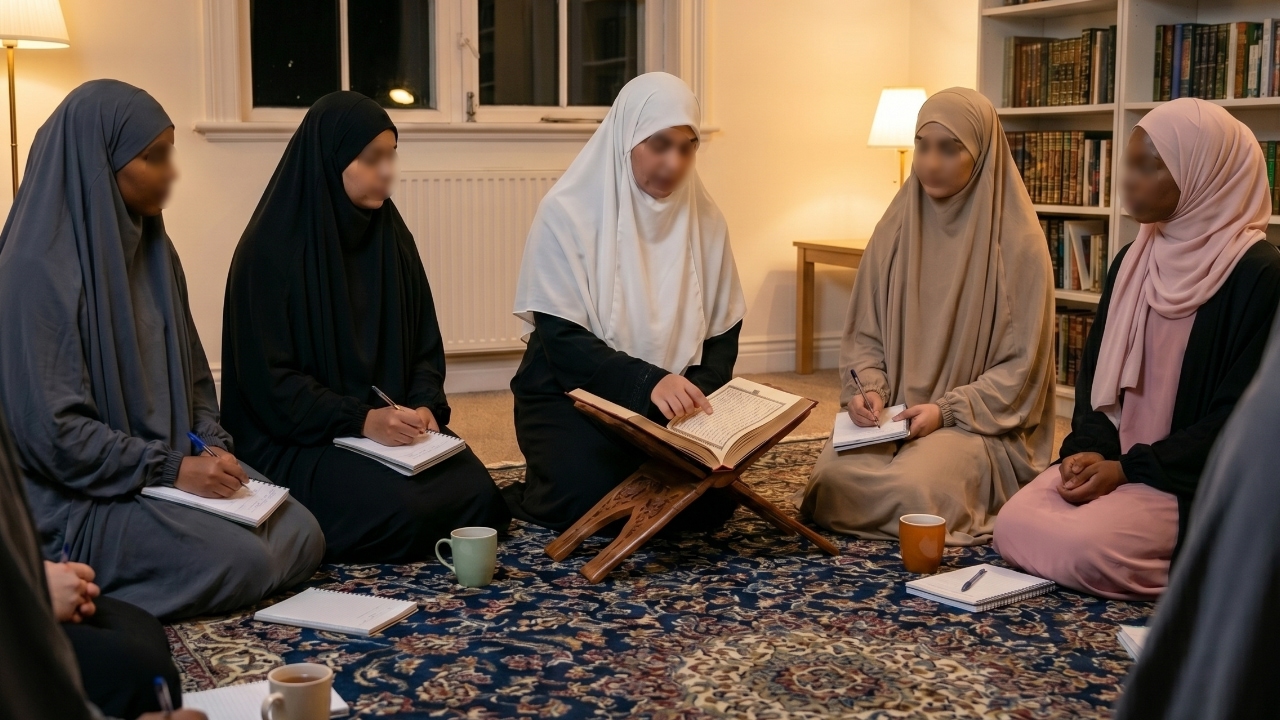
As the sun dips below the horizon, a particular tranquillity settles over the mosque. The management committee has graciously given you the madrasah room for the night — a space that by morning will have held more than anyone quite anticipated — but for now it waits, quiet and ordinary, for what is about to fill it.
By nine o’clock the sisters begin to arrive, each dressed in her favourite abaya, and the room brightens with colour: deep greens, soft greys, rich burgundies, the occasional flash of embroidery catching the light.
They come bearing dishes, and a table in the corner fills quickly — biryani fragrant with spice, chicken tender from long cooking, pasta, sweets, things carried carefully from home kitchens — until it is overflowing and the room smells of generosity. You settle together, admire what has been brought, and eat with the ease of people who have gathered for a purpose they share but haven’t yet fully named.
Then comes the talk. The conversation moves naturally, as good conversations do, from the significance of trials and tests in Islam to the personal — experiences of difficulty, of faith stretched and held, of challenges that shaped something in you that comfort never could.
Then, almost of its own accord, it turns toward refugees: toward what it means to leave everything at a moment’s notice, to make decisions under duress that most of you have never faced, to carry your life in a bag and walk toward an uncertain horizon. The room grows quieter. A particular heaviness settles in it, not oppressive but honest, the weight of genuine reckoning with realities far beyond this warm circle.
You gather for Isha, and the sound of your duas rising nearly in unison fills the room with something that was already present but unnamed. Afterwards you sit together on the floor and share a single plate — biryani and chicken eaten with your hands, unhurried, the communal simplicity of it more nourishing than the food alone. There is laughter, and there is also something quieter beneath the laughter, a quality of attention that the earlier conversation has left behind.
As the clock moves toward midnight, tahajjud begins. The whispered prayers fill the room, a stillness deepening within stillness, and by the time you finish, exhaustion has settled into your bones in that particular way that comes from a day of preparation and an evening of emotion.
You make your beds on the hard floor — abayas on, rucksacks for pillows, no blankets — and the floor wastes no time in making its presence felt. Sleep, when it comes, comes fitfully. You shift, find no relief, shift again. The cold presses through your clothing and the hard surface finds every joint with patient thoroughness. Around you the sisters are doing the same: turning carefully, seeking positions that don’t quite exist, settling into a restless kind of stillness.
The room is never fully quiet — there is always a soft movement somewhere, a breath, the rustle of fabric — and in the long wakeful stretches between thin snatches of sleep, the conversation from earlier returns. You don’t need to think your way toward empathy. The floor has already begun its work.
People who sleep like this every night. People for whom the rucksack under the head holds everything that remains. People who lie awake not from discomfort alone but from fear, from grief, from not knowing what the morning holds or whether those they love are safe.
The call for suhoor stirs you from your restless half-sleep. Your body is stiff, your rest was shallow, and the effort of rising feels strangely monumental for something so simple. You gather for a small meal, eat with the deliberateness of people fuelling themselves for something demanding, and make your intentions to fast.
Fajr is prayed in a quiet that feels different from last night’s quiet — thinner, more fragile, the particular peace of people who are tired and ready and not quite sure what the day will ask of them. Afterwards there is Quran, and duas, voices soft in the early light. Then the gathering of bags, the straightening of hijabs, the small practical preparations for departure.
You are weary, and there is still anxiety about what lies ahead, but beneath both of those things something else has taken root: a sense of purpose that wasn’t there yesterday morning, a connection to the challenge ahead that goes deeper than the physical.
Last night’s discomfort was not merely inconvenience to be endured — it was the first lesson, the one that had to be felt rather than taught, the one that the cold floor delivered more honestly than any talk could. The day ahead waits, and you are ready to meet it.