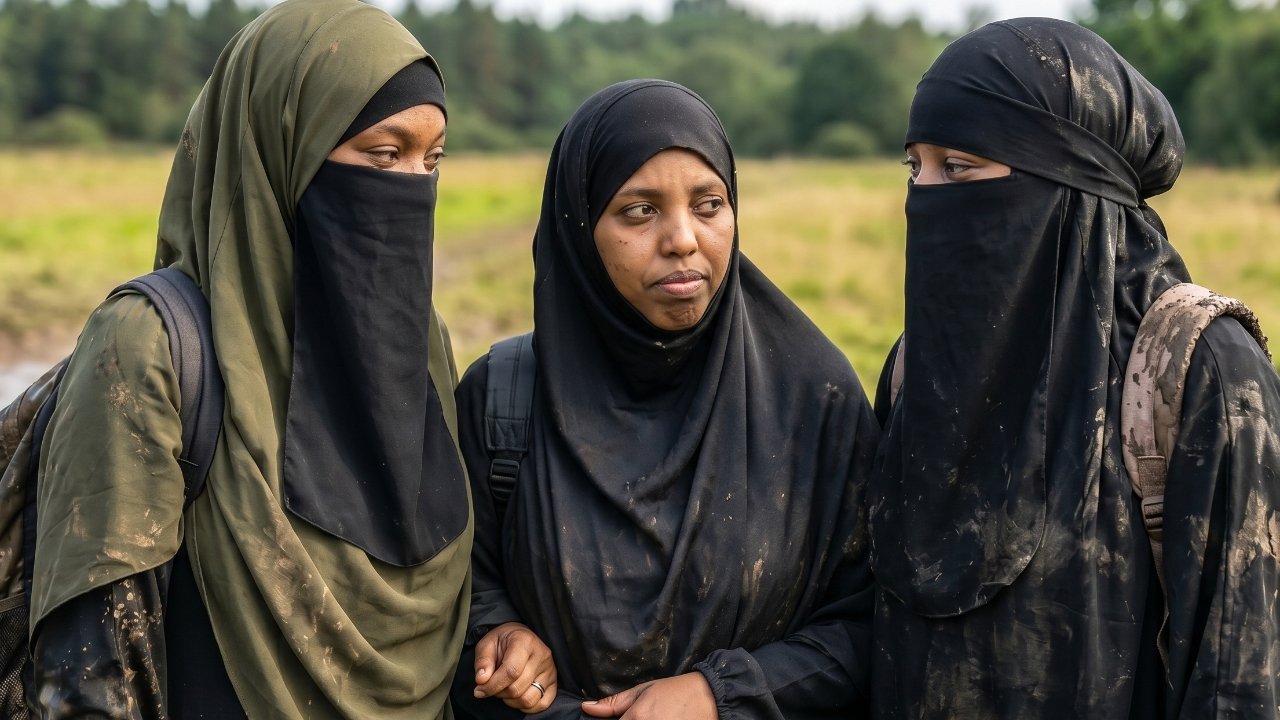
There is a difference between knowing and understanding. You can know that refugees cross rivers whilst fleeing violence. You can know they walk for days without adequate food. You can know their clothing becomes heavy with mud and water, making each step harder than the last. You can know all of this intellectually whilst it remains abstract, distant, something that happens to other people in other places that you’ll never visit.
Understanding requires something more. It requires the body’s participation, not just the mind’s acknowledgment. This is what Trials & Tribulations offers: a bridge between knowing and understanding, between sympathy and solidarity, between abstract concern and visceral comprehension of what refugees actually endure.
When your body becomes teacher
The challenge is deceptively simple: navigate obstacles whilst fasting, dressed in modest clothing that restricts movement and becomes heavy when wet. Walk through mud that sucks at your feet. Wade through water. Climb walls and crawl through tunnels. Keep moving when exhaustion suggests stopping, when hunger makes concentration difficult, when the finish line seems impossibly distant.
Your body teaches what words cannot convey. The abaya grows heavy with mud: not metaphorically heavy but actually, physically heavy, each step requiring more effort than the last. The hunger is not poetic but literal, your stomach contracting, your energy depleting, your mind beginning to fixate on when you’ll finally eat. The cold water soaking through your clothing is not symbolic but real, making you shiver, making the next obstacle harder because you’re now wet and chilled and still have hours to go.
This is the pedagogy of embodiment: lessons learned through muscle and bone, through breath that comes harder, through the peculiar exhaustion that comes from pushing past what seemed like your limit only to discover another limit beyond it, and another beyond that.
When participants finish the challenge, they carry new knowledge in their bodies. They know — not abstractly but concretely — what it means to keep moving when clothing restricts you, when hunger saps your strength, when terrain offers no mercy. They know how long a few hours of this can feel, which helps them begin imagining what days or weeks of it might entail.
The empathy that comes from struggle
Empathy built through shared struggle differs from sympathy observed from safety. Sympathy says: “I feel sorry for your suffering.” Empathy says: “I have touched the edge of that suffering myself, and though my experience was brief and voluntary, it showed me something true about what you endure.”
This distinction matters. Sympathy can be passive, even self-congratulatory — a comfortable feeling of being compassionate without any real cost. Empathy demands more because it comes from your own discomfort, your own confrontation with limits, your own discovery of what persistence actually requires when the easy option is to quit.
During the challenge, participants experience their own moments of doubt. The obstacle seems too high. The water too cold. The mud too deep. The fatigue too complete. In these moments, they have choices: push through or stop, dig deeper or give up, trust that strength remains even when it feels depleted or believe the exhaustion that says this is impossible.
When they choose to continue — when they discover they can continue — they learn something essential about human capacity for resilience. They also learn about the privilege of choice itself. They can stop if they truly need to. They can quit without consequences beyond mild embarrassment. Refugees have no such luxury. For refugees, stopping might mean death, turning back might mean returning to violence, giving up might mean watching your children suffer.
The challenge doesn’t erase this difference; the gap between chosen discomfort and forced survival remains vast. But it makes the gap visible in a way that abstract knowledge cannot. Participants finish muddy and exhausted but safe, knowing they’ll eat soon, shower, rest, return to comfortable lives. And in that knowledge lies the lesson: the discomfort they just experienced ends, but for refugees it continues, sometimes for years, sometimes forever.
Building community through shared ordeal
Something shifts when people struggle together. The usual social hierarchies flatten. The fittest might tire before the supposedly weak discover unexpected reserves. The extroverts might falter whilst the quiet ones prove surprisingly steady. Everyone becomes simply sisters navigating difficulty together, offering encouragement when someone falters, celebrating when someone overcomes an obstacle they thought impossible.
This communal aspect mirrors refugee experience in essential ways. Refugees survive not just through individual resilience but through networks of mutual support — sharing food when supplies are scarce, carrying each other’s children when exhaustion makes another step impossible, protecting one another from threats, maintaining hope when despair would be the easier choice.
When participants help each other through the challenge — pulling someone over a wall, offering encouragement at a difficult obstacle, walking alongside someone who’s struggling — they practice the solidarity that refugees depend on for survival. They learn that getting through isn’t about individual achievement but about collective perseverance, about refusing to let anyone be left behind, about staying connected to purpose larger than personal comfort.
These lessons don’t remain confined to the few hours of the challenge. Participants carry them forward, noticing how they respond to others’ struggles, how quickly they offer help or encouragement, how differently they engage with news about refugees once they’ve tasted a fraction of what those journeys entail.
From experience to action
The challenge transforms passive concern into active commitment. Before participating, someone might see images of refugees and feel momentary sadness before moving on with their day. After participating, those same images trigger visceral memory: the exhaustion, the cold, the hunger, the difficulty of keeping going when everything hurts.
This visceral connection makes apathy harder to sustain. You cannot unknow what your body has taught you. You cannot forget how difficult it was to navigate obstacles for a few hours and return to pure abstraction when considering refugees who navigate similar obstacles for months or years.
Many participants report that the challenge changes how they engage with refugee issues. They donate more consistently to refugee support organisations. They pay closer attention to news about displacement and asylum policies. They speak up in conversations where refugees are dismissed or blamed for their circumstances. They volunteer with refugee support services or advocate for policy changes.
This movement from experience to action is precisely what the challenge aims to generate. The goal is not simply to raise funds — though that matters enormously — but to create lasting commitment, to build a community of people who maintain attention and support beyond news cycles, who recognise refugees not as abstract problems but as human beings enduring difficulties they themselves have now touched.
What organisers are really offering
When you organise Trials & Tribulations, you are creating something more valuable than a fundraising event. You are offering transformation — a chance for comfortable people to step outside comfort deliberately, to confront their own limits, to discover capacities they didn’t know they possessed, and most importantly, to build empathy that comes from embodied experience rather than distant observation.
This is sacred work, though it might not look like it when everyone’s covered in mud and complaining about how cold the water is. You are creating conditions where learning happens not through lectures or statistics but through the body’s own wisdom, through the lessons that persist because they’re written into muscle memory and personal experience.
Not everyone who participates will be transformed. Some will focus on personal achievement or fitness goals despite your efforts to redirect attention toward refugee solidarity. But many will get it: they will understand that this brief discomfort points toward something much larger, that their struggle mirrors struggles happening globally, that the privilege of choosing this challenge comes with responsibility to support those who have no choice.
Trust that the experience itself will teach. Your job is to create the conditions: the route, the obstacles, the fasting requirement, the modest dress, the waypoints of reflection and remembrance. But the actual pedagogy happens between participants and their own bodies, between their exhaustion and the realisation that refugees experience exhaustion compounded by trauma, between their relief at finishing and the recognition that refugees often have no finish line to cross.
Making it matter
For the transformation to stick, participants need support integrating what they’ve learned. This is where your role extends beyond the challenge itself. In the days following, create opportunities for reflection and discussion. What did they learn about themselves? About resilience? About the refugee experience? How has their understanding shifted?
Help them channel their new empathy into sustained action. Provide information about refugee support organisations. Share opportunities to volunteer or advocate. Create ongoing connections so the community built during the challenge continues beyond it, so the commitment doesn’t fade once the mud has been washed away and the muscles have stopped aching.
Consider making this an annual practice, a rhythm that keeps refugee solidarity alive within your community. Each year, some participants return while new ones join, deepening and expanding the circle of those who understand embodied empathy, who have learned through their own struggle something true about what others endure.
The challenge is not a complete education — nothing short of actual displacement could be — but it’s a beginning. It’s a doorway into deeper understanding, a catalyst for ongoing commitment, a practice of solidarity that honours refugees not through pity but through the willingness to experience discomfort in the direction of comprehension.
This is the value you’re offering when you organise Trials & Tribulations: not just a day of physical challenge but a pathway toward transformation, not just fundraising but the creation of sustained solidarity, not just sympathy observed from safety but empathy earned through chosen struggle. Use it well.