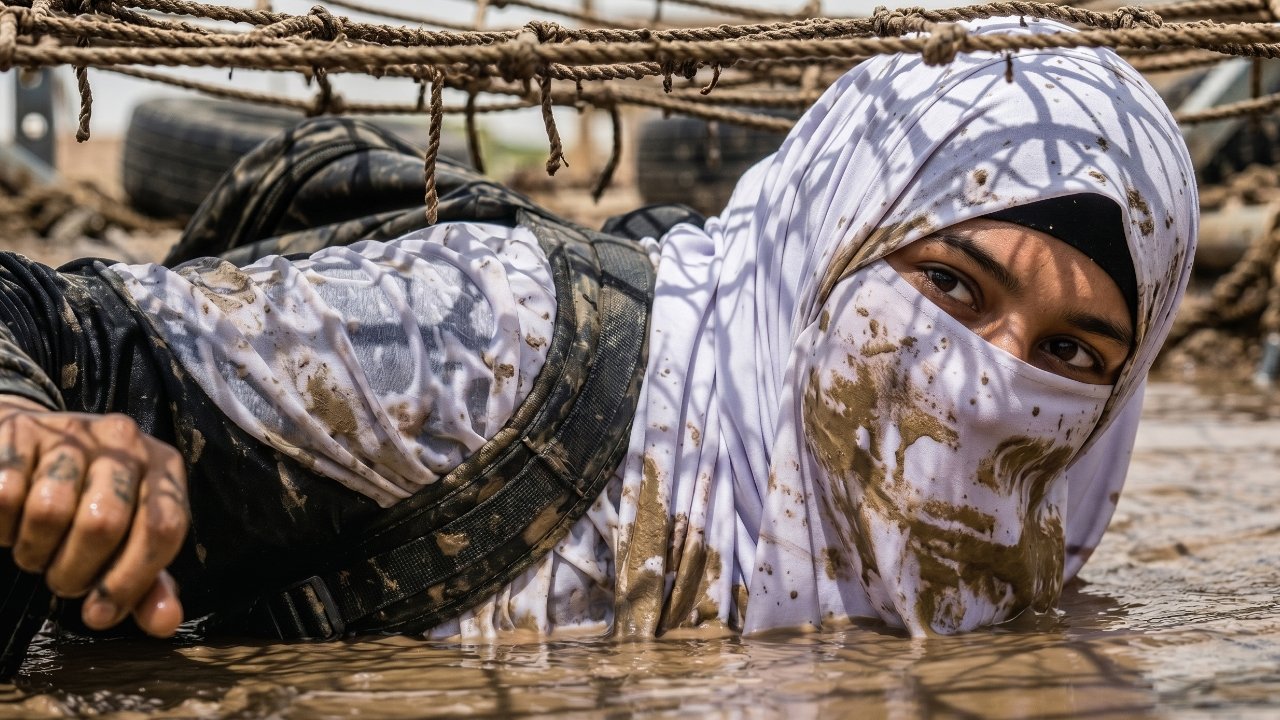
You will watch them gather at the start — these sisters whose abayas are carefully chosen, whose hijabs are meticulously pinned and secured. Some faces show determination. Others reveal nervousness about what awaits. All carry that particular mixture of anticipation and apprehension that comes before deliberately stepping into difficulty. They are about to discover that their modest dress, far from limiting them, will teach lessons that comfortable athletic wear never could.
Your role is not to shield them from discomfort but to help them understand what discomfort offers. How every scrape becomes testimony, how each bruise writes story, how the weight of waterlogged fabric mirrors burdens others carry without choice. This is sacred work: guiding sisters through the refining fire of chosen hardship, helping them discover that strength often waits beyond what we perceive as our boundaries.
The first steps into unfamiliar territory
As they begin moving, watch how elegant fabric flows with them, brushing against legs and catching the breeze. There is moment of adjustment: pace, footing, awareness of how layers move. Some will struggle initially, uncertain how to navigate obstacles whilst maintaining modesty. Others will settle quickly into the rhythm. All will need your steady presence reminding them that this awkwardness is part of the teaching.
Their carefully chosen abayas feel both familiar and strange in this setting. Modest clothing is usually unseen in contexts like these, and their attire might draw curious glances from any onlookers. Help them recognise why this matters: they are demonstrating that Muslim women can take on the same challenges as anyone else without compromising who they are, that modesty and capability are not mutually exclusive, that faith does not require remaining in comfortable territory.
The first obstacles leave their marks: small scrapes on palms, tender spots on knees. Watch for sisters who wince or seem troubled by these minor injuries. Speak gently about badges of honour, about how each mark tells story of persistence, about how discomfort chosen in service of solidarity differs from discomfort randomly inflicted. Frame the scrapes not as damage but as evidence of engagement, proof they’re not holding back or playing it safe.
Grounding through mud
When they reach the sections requiring crawling through thick, sticky mud on hands and knees, something shifts. The earth is cold and damp beneath them. Mud pulls at abayas, turning lightweight fabric into heavy second skin that clings and seeps through to leave tender bruises on knees and elbows. Every movement becomes test of will.
This is where you remind them — gently, without diminishing their struggle — that this is what life often feels like. The weight, the resistance, the dull ache in muscles straining against difficulty. The mud doesn’t care about their careful preparation or good intentions. It simply is what it is: difficult, messy, demanding persistence inch by inch.
Watch their once-pristine abayas become canvases of determination, each muddy streak and small tear telling its own story. Some sisters will laugh at the absurdity of crawling through mud whilst trying to maintain hijab. Others might feel distressed at ruined clothing. Help them see both responses as valid whilst gently orienting toward the deeper meaning: these garments are being marked by embodied solidarity, transformed from symbols of modesty into symbols of chosen difficulty honouring those who face unchosen hardship.
The struggle, the weight pulling at fabric and limbs, the cold seeping through: all of it grounds them literally and figuratively. They are touching earth, getting dirty in ways their usual lives carefully avoid, discovering that they can endure what comfort-oriented existence suggests they cannot. This knowing lives in the body now, written in mud and aching muscles, unforgettable in ways mere intellectual understanding never achieves.
Climbing beyond perceived limits
When they reach walls or cargo nets, watch for hesitation. Mud-caked abayas feel like extra challenge now, catching on edges and adding weight to every climb. Rope burns sting palms. Earlier bruises remind of their presence. This is moment when some might question whether they can continue, whether the challenge asks too much.
Your voice matters here: not cheerleading or false reassurance but honest acknowledgment paired with gentle redirection. “You’ve faced bigger barriers in life,” you might say quietly. “What’s a little fabric and discomfort compared to the strength you’ve already demonstrated just by being here?”
Watch them adjust, tuck fabric, refocus. Their movements might lack grace — modesty makes climbing awkward in ways athletic wear wouldn’t. But grace is not the point. Persistence is. Watch them pull themselves up and over, one aching hand at a time, their hijabs staying secure despite sweat and mud: a constant reminder of purpose transcending physical achievement.
At the top of each obstacle, there is often moment of triumph. Let them have this: the brief satisfaction of having exceeded their own expectations, the recognition that they’re stronger than the doubts whispering impossibility. But also gently redirect: this strength is not merely theirs to celebrate but gift to offer, proof that Muslim women contain capabilities the world too often denies, demonstration that modesty does not mean timidity or fragility.
Carrying weight through water
The water is perhaps the hardest part. Cold shocks the system as abayas transform from flowing fabric to clinging weight. Waterlogged material adds kilos to every movement, dragging at tender muscles with each step. Hijabs grow heavy against necks and shoulders, testing endurance further. The weight feels almost unbearable at first.
This is where the teaching deepens. Help them recognise — perhaps through your own struggle as you undertake the challenge alongside them — that this physical weight mirrors what so many women carry daily. Not just Muslim women but refugee women specifically: burdens of displacement, expectations of survival under impossible circumstances, sheer exhausting weight of continuing when every instinct begs for rest.
Their heavy, waterlogged abayas become symbols of refugee resilience and strength. The sisters wading through cold water whilst fabric pulls them down are experiencing pale echo of women who wade through actual rivers to flee conflict, who walk for days whilst carrying children and whatever possessions they couldn’t bear to leave behind, who persist through exhaustion that makes this challenge’s difficulties seem trivial by comparison.
Frame this explicitly. Don’t let the parallel remain implicit or the sisters might miss the connection between their temporary discomfort and refugee women’s permanent displacement. Help them understand that every step through heavy water whilst fabric drags them down is embodied prayer for those who wade through much worse, that their persistence honours women who have no choice but to persist.
Testimony written in mud and bruises
By the end, there is no part of anyone untouched by mud. It’s in hair, on faces, layered thickly on once-beautiful abayas and hijabs. Every movement reminds of new bruises forming, of muscles pushed to their limits. Some sisters will look at themselves and laugh — it’s hard not to when you’re completely transformed from the composed person who started. Others might feel overwhelmed by how thoroughly the challenge has marked them.
Help them see the mud not as mere dirt but as evidence of effort, perseverance, of refusal to give up despite every comfortable instinct suggesting surrender. The bumps, bruises, and scrapes earned along the way are trophies in truest sense: not symbols of victory over others but testimony to victory over the self that prefers ease, over the voice that whispers impossibility, over the comfortable distance that lets us care about refugees without embodying any fraction of their difficulty.
Each tender spot tells story of determination. These marks don’t diminish the sisters who earned them, but refine them. The challenge has written its teaching on their bodies in language that intellectual understanding alone cannot convey. They will carry this knowing forward: that they can endure more than they believed, that discomfort is survivable, that choosing difficulty in service of solidarity transforms both the choosing and the one who chooses.
What you’re teaching through the physical
This challenge is never only about the physical, though the physical is essential. You are teaching through every ache and discomfort truths that comfortable existence obscures:
Faith becomes action when enduring physical trials whilst maintaining modesty. Every bruise, every scrape, every moment of pushing through pain whilst keeping hijab secure becomes act of devotion — not because the challenge itself is worship but because choosing difficulty to honour refugee experience whilst refusing to compromise Islamic practice demonstrates faith that costs something, that risks discomfort, that insists on both solidarity and identity.
Empathy lives in the body more authentically than in the mind. The discomfort these sisters experience is temporary, but it opens eyes to struggles of others in ways mere knowledge cannot. Their aching muscles become bridges of understanding. When they feel cold water pulling at heavy fabric, when they struggle to climb whilst modesty limits movement, when they want desperately to quit but continue anyway, they are experiencing fraction of what refugee women endure not by choice but by necessity.
Strength emerges through community in ways individual effort rarely reveals. When sisters undertake this challenge together, the bonds built through shared discomfort are irreplaceable. Helping each other up when muscles scream protest, sharing laughter through the mud, celebrating each sister’s triumph over physical and mental challenges creates memories and connections that last lifetimes. Watch for opportunities to facilitate this mutual support, to point out when one sister’s encouragement makes possible another’s persistence.
Guiding them through the pedagogy of discomfort
As leader, your role requires balancing seemingly opposite truths. You must acknowledge the genuine difficulty whilst preventing it from becoming excuse to quit. You must honour their struggle whilst redirecting focus toward refugee experiences that dwarf this challenge. You must celebrate their capability whilst ensuring they understand this is not primarily about personal achievement.
When you see sister struggling — when she’s cold and tired and covered in mud and questioning why she signed up for this — resist the urge to make it easier. Instead, sit with her in the difficulty. Acknowledge it honestly: “This is hard. You’re right to feel overwhelmed. Your body is protesting and that makes sense.” Then gently orient toward meaning: “But you’re doing this for women who face much worse without choice. Your discomfort honours their displacement. Your persistence witnesses their resilience.”
When you see sister who’s finding the challenge relatively manageable — perhaps athletic, perhaps naturally resilient to physical difficulty — help her understand that ease can actually limit the teaching. The sister who struggles teaches more authentically what refugee experience entails: that those who endure should not have to prove exceptional capability, that survival is not testimony to special character but to desperate necessity, that making it look easy inadvertently suggests refugee journeys require only fitness and determination.
The transformation you’re facilitating
Modern life is designed for comfort, for avoiding unpleasant experiences, for insulating ourselves from anything that might cause discomfort or require genuine sacrifice. You are leading sisters in deliberate rebellion against this. Helping them choose discomfort when they could choose ease, embrace hardship when they could remain comfortable, step into difficulty when they could watch from safe distance.
This choosing matters profoundly. It builds character that comfort never develops. It strengthens faith that ease cannot test. It fosters gratitude for blessings that go unnoticed when we’ve never experienced their absence. It creates empathy that sympathy alone never achieves.
Watch them as they reach journey’s end: muddy, exhausted, transformed in ways they perhaps cannot yet articulate. Their abayas will never look the same, marked permanently by this test of will. But isn’t that the point? They are not the same. The challenge has refined them, has taught them truths about strength and vulnerability, about capability and limits, about solidarity that costs comfort and faith that chooses difficulty.
Your sacred responsibility
You are not merely organising an event or supervising activity. You are facilitating transformation, helping sisters discover that discomfort is teacher rather than enemy, that chosen hardship serves purposes comfort never could, that stepping beyond perceived boundaries reveals capacities we didn’t know we possessed.
Handle this work with reverence it deserves. When a sister arrives nervous and uncertain, see the courage her presence represents. When a sister struggles through mud whilst trying to maintain hijab, recognise the integrity her persistence demonstrates. When a sister wants to give up, honour the honesty whilst gently encouraging continuation. When a sister crosses finish line transformed, acknowledge the sacred work of choosing difficulty in service of solidarity.
The mud will wash away. The bruises will fade. The muscles will recover. But the knowing stays, written in memory deeper than words, carried in bodies that remember what they survived, held in hearts that discovered strength through necessity and solidarity through shared struggle.
This is the gift you offer them: not merely challenging experience but opportunity to embody empathy, to honour refugee resilience through willingness to face pale shadow of their difficulty, to discover that Muslim women contain capabilities the world too often denies, to prove that modesty and strength are not opposites but companions, that faith lived fully sometimes requires wading into cold water whilst fabric pulls you down.
Lead them gently into this difficult teaching. Hold space for their struggle without minimising it. Redirect toward refugee experiences without diminishing their own very real discomfort. Celebrate their capability whilst ensuring they understand this is about solidarity rather than achievement. Help them see that every bruise, every scrape, every aching muscle has shaped them into someone stronger, more resilient, more deeply connected to faith and community and the displaced women whose struggles they’ve chosen to honour through embodied witness.
This is essential work you’re doing. May it be blessed. May the sisters you guide discover strength they didn’t know they carried. May their discomfort become bridge to understanding, their persistence become testimony to solidarity, their transformation become invitation for others to step beyond comfort’s familiar boundaries into territory where growth waits, where empathy lives, where faith finds its courage tested and affirmed.