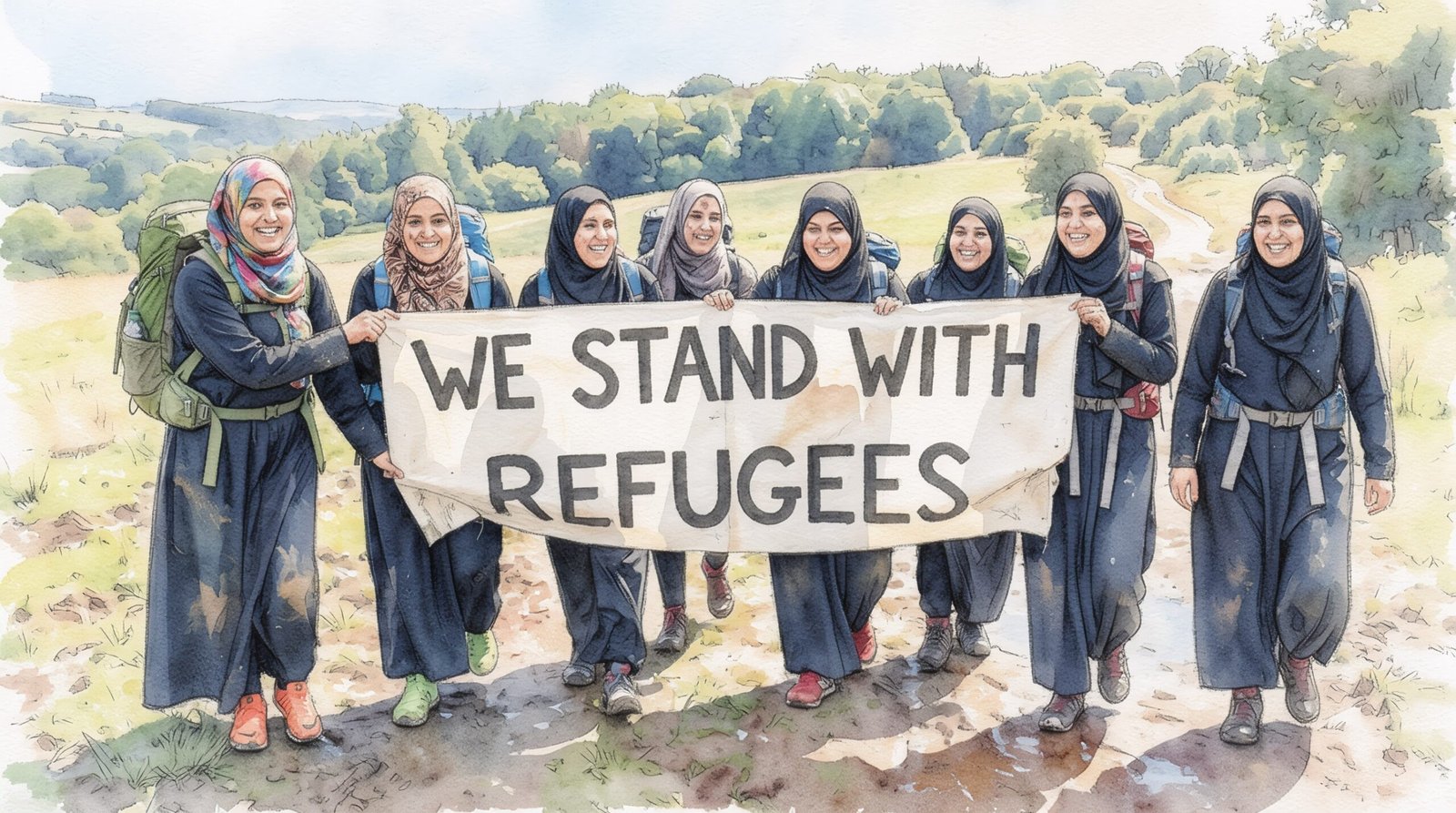
The walking route is where participants really begin to understand what the challenge is about. This isn’t just a nice country walk, but a meaningful journey that helps people connect with refugee experiences while building resilience and community bonds. Planning the right route makes all the difference.
What makes a good route
The right level of challenge
Your route should be:
- Physically demanding enough to be meaningful without being dangerous
- Long enough that people feel they’ve achieved something (typically 3-8 miles depending on group)
- Include varied terrain that requires different types of effort
- Have some muddy or challenging sections that create shared difficulty
- Allow for rest stops and regrouping opportunities
Practical considerations
- Start and end points accessible by transport
- Mobile phone coverage along most of the route
- Safe walking conditions (avoiding busy roads where possible)
- Accessible for your group’s range of abilities
- Alternative shorter routes if someone struggles
Route planning basics
Distance guidelines for different groups
Family and friends (up to 10):
- 3-5 miles usually works well
- Adjust for the least fit person in your group
- Plan for frequent rest stops
- Have escape routes if someone needs to stop early
Community groups (20+):
- 5-7 miles often appropriate
- Consider mixed fitness levels and ages
- Plan for different walking speeds
- Have support for slower walkers
Larger events (40+):
- 6-8 miles can work for well-prepared groups
- May need to split into smaller walking groups
- Require more detailed planning and support
- Consider transportation logistics for larger numbers
Types of terrain to include
Muddy sections
Essential for the authentic challenge experience:
- Farmland paths after rain
- Woodland trails with natural mud
- Areas near streams or water features
- Fields with livestock tracks
Varied challenges
Include different types of difficulty:
- Hills or inclines that require sustained effort
- Uneven ground that requires careful footing
- Stream crossings or water features
- Areas requiring navigation or route-finding
Natural rest points
Build in opportunities for:
- Beautiful viewpoints for reflection
- Sheltered areas for breaks during bad weather
- Stream crossings where people can clean up
- Open spaces suitable for group gatherings
Practical route planning
Walking the route yourself
Always walk your planned route beforehand:
- Check current ground conditions and seasonal changes
- Time how long it actually takes to walk
- Identify potential hazards or difficult sections
- Note landmarks and decision points
- Check mobile phone coverage throughout
Seasonal considerations
Routes change significantly with seasons:
- Spring: Often perfect mud levels from winter rain
- Summer: May be drier but still challenging
- Autumn: Good mud renewal from autumn rains
- Winter: Avoid due to safety concerns
Getting route information
- Ordnance Survey maps show public footpaths and terrain
- Local walking groups often have route recommendations
- Council websites list public rights of way
- Walking apps like OS Maps help with planning and navigation
Navigation planning
Route marking and guidance
For community organised events:
- Identify clear landmarks and decision points
- Plan how to keep groups together at challenging navigation points
- Have backup navigation if weather affects visibility
- Consider simple route marking for larger groups
Technology aids
- Smartphone apps with offline maps
- GPS coordinates for key waypoints
- Digital route sharing with group leaders
- Backup paper maps in case technology fails
Group navigation skills
- Ensure at least one person per small group can navigate
- Teach basic map reading if needed
- Have procedures for if groups get separated
- Plan communication between different walking groups
Safety considerations
Risk assessment for your route
Consider potential hazards:
- Road crossings and traffic
- Water features and drowning risks
- Steep slopes and fall hazards
- Remote areas with poor emergency access
- Weather exposure and shelter availability
Emergency planning
- Know how emergency services can reach each part of your route
- Identify evacuation points if someone can’t continue
- Plan communication for emergencies
- Have transport backup for participants who need to stop
Group management
- Plan for different walking speeds
- Have leaders at front and back of groups
- Create systems for regular headcounts
- Plan rest stops at appropriate intervals
Working with landowners
Public rights of way
Most routes use established public footpaths:
- Check current OS maps for legal rights of way
- Respect any restrictions or seasonal closures
- Follow the Countryside Code for responsible access
- Report any blocked or dangerous sections to local authorities
Private land considerations
If considering private land:
- Always get written permission from landowners
- Understand any restrictions or requirements
- Respect farming activities and livestock
- Consider insurance implications
Transport logistics
Start and end points
Plan for practical transport:
- Accessible by your planned transport (car, minibus, public transport)
- Adequate parking if using private vehicles
- Public transport links if participants are making their own way
- Safe dropping off and picking up points
Circular vs linear routes
- Circular routes return to the same point (easier for transport)
- Linear routes require transport arrangements at both ends
- Linear routes can provide better variety and challenge
- Consider your transport resources when choosing
Route variations
Multiple difficulty levels
Consider offering:
- Standard route for most participants
- Shorter alternative for those who struggle
- Extended route for those wanting more challenge
- Bypass options for difficult sections
Weather alternatives
Plan for different conditions:
- Shorter routes if weather deteriorates
- Indoor alternatives if conditions become dangerous
- Route modifications if sections become impassable
- Clear criteria for when to change plans
Connecting to the deeper meaning
Educational opportunities along the route
Use natural rest stops for:
- Discussions about refugee journeys and experiences
- Reflection on the physical and emotional challenges
- Sharing stories and statistics about displacement
- Connecting the landscape to refugee experiences
Reflection points
Plan specific locations for:
- Brief talks about refugee experiences
- Moments of silent reflection
- Group discussions about the challenge so far
- Connection between temporary discomfort and permanent displacement
For different types of routes
Countryside walking
- Use established footpath networks
- Include variety of terrain and challenges
- Plan for seasonal mud and weather conditions
- Consider livestock and farming activities
Urban routes
- Include parks and green spaces where possible
- Plan safe road crossings and traffic management
- Use urban features creatively for challenge elements
- Consider noise and crowding issues
Coastal paths
- Check tide times and weather conditions
- Plan for wind and exposure
- Ensure safe distances from cliff edges
- Have alternatives if coastal weather becomes dangerous
Learning from experience
After each route
- Ask participants for feedback on distance and difficulty
- Note which sections worked well and which didn’t
- Record seasonal changes and their impact
- Build a library of tested routes for different conditions
Continuous improvement
- Refine routes based on experience
- Share successful routes with other community groups
- Learn from other organisers’ experiences
- Keep detailed notes for future planning
The route you choose can make or break your challenge experience. When planned thoughtfully, it becomes a journey that builds empathy, resilience, and community bonds.
Start with routes you know or that others have recommended, but always walk them yourself first. The investment in good route planning pays dividends in participant safety, enjoyment, and meaningful engagement with the challenge’s deeper purpose.